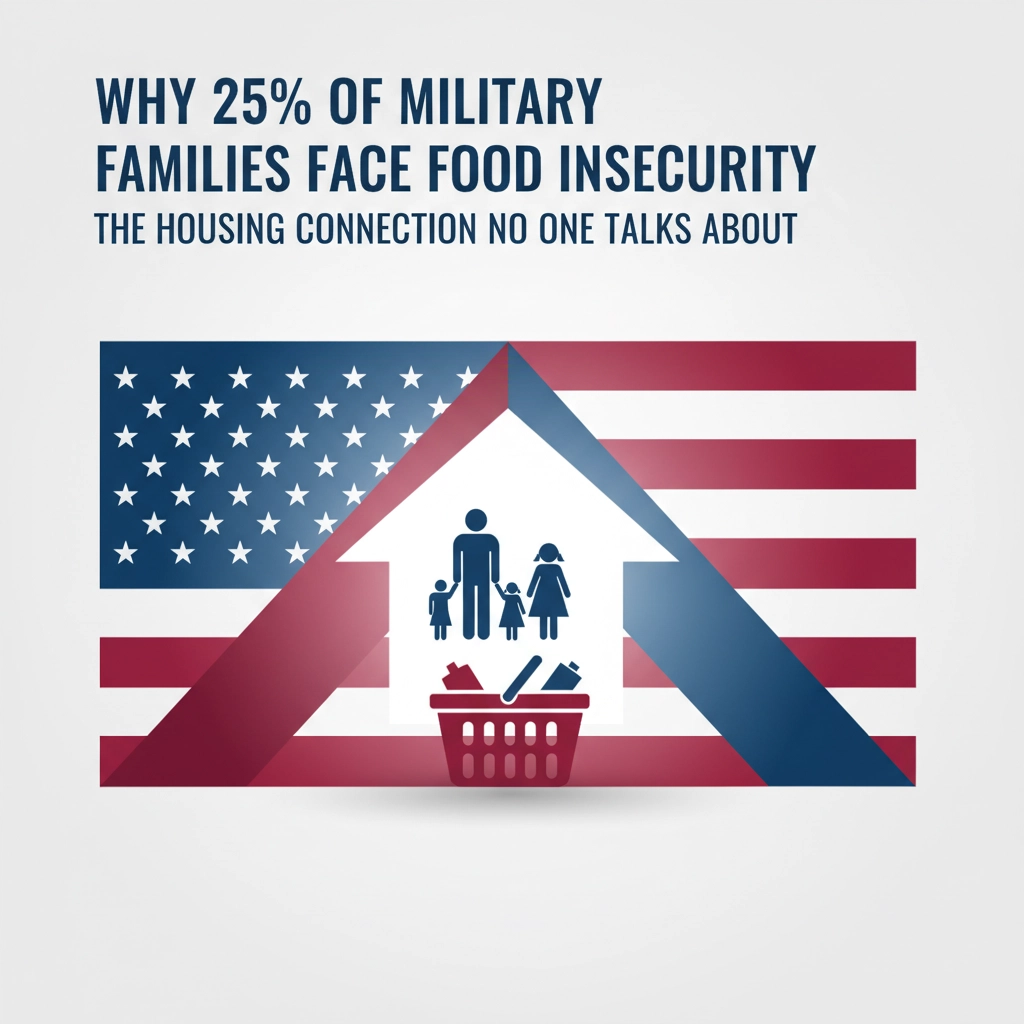
Here's a statistic that should make every American pause: one in four active duty military families struggle with food insecurity. That's 25% of the families serving our country who don't know where their next meal will come from.
While our service members defend freedom abroad, they're fighting a different battle at home: one against empty pantries and impossible choices between groceries and rent. The connection between housing costs and hunger in military families runs deeper than most people realize, and it's time we talked about it.
The PCS Nightmare: Moving Every 2.5 Years
Military families don't just move: they uproot their entire lives every two and a half years on average. Each Permanent Change of Station (PCS) move isn't just a change of address; it's a complete financial reset that can devastate a family's budget.
Here's what most civilians don't understand: more than half (51.6%) of military families who relocated within the past 24 months experienced food insecurity. That's not a coincidence: it's a direct result of the housing-related financial strain that comes with constant moves.
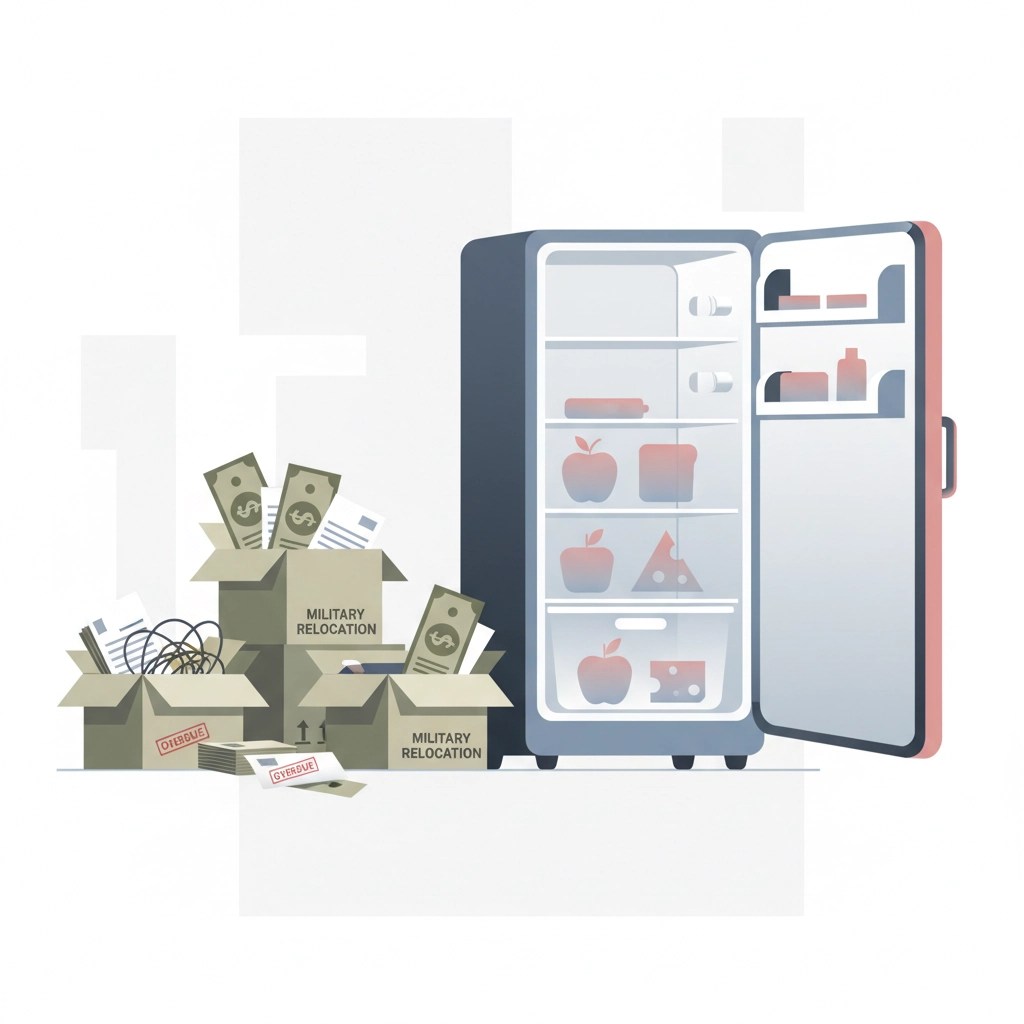
Every PCS move means:
- Security deposits for new housing
- Application fees for rentals
- Temporary lodging expenses
- Moving costs not fully covered by the military
- Lost wages during transition periods
- Starting over with utility deposits and connections
While families drain their savings account for these housing-related expenses, the grocery budget becomes the easiest thing to cut. It's heartbreaking, but it's reality for far too many military families.
The Rent vs. Food Dilemma
Military families report having to choose between buying food or paying rent: a decision no family should ever face. This isn't about poor money management; it's about the harsh reality of housing costs consuming an outsized portion of military family budgets.
The Basic Allowance for Housing (BAH) is supposed to cover housing costs, but it often falls short in expensive markets where military bases are located. When housing eats up more than the intended percentage of income, families have to cut somewhere else. Unfortunately, food becomes the flexible expense in a budget full of fixed costs.
Young military families with children face the worst of it. They're dealing with:
- Entry-level military pay
- Higher food costs for growing families
- Housing markets they can't control
- The inability to build equity through homeownership due to constant moves
The Renting Trap
Here's a housing connection that doesn't get enough attention: military families who rent rather than own their homes experience significantly higher rates of food insecurity. This creates a vicious cycle where families can't build equity, can't benefit from homeownership tax advantages, and remain vulnerable to rent increases and housing market fluctuations.
The constant moving makes homeownership seem impossible for many military families. They assume they'll just have to rent at every duty station, missing out on the financial stability that comes with building equity. This perpetual renter status keeps families financially vulnerable and more likely to experience food insecurity.

Military Spouse Employment: The Hidden Factor
Military spouse unemployment rates hover around 38%: nearly eight times the national average. Even when military spouses find work, they consistently earn lower wages due to frequent relocations disrupting career advancement.
This employment gap directly impacts food security. Families rely more heavily on the service member's income alone, stretching military pay to cover both housing and food costs. When housing takes up too much of that single income, food becomes negotiable.
The career disruptions from moving every few years mean military spouses:
- Can't build professional networks
- Struggle to maintain professional licenses across states
- Accept underemployment just to have some income
- Face childcare challenges that limit work options
The Shame Factor
Despite clear need, only 0.08 to 0.42% of service members were enrolled in SNAP benefits as of 2019. This isn't because military families don't qualify: it's because of the stigma surrounding food assistance in military culture.
Military families feel embarrassed about needing help. They view food insecurity as incompatible with military service, creating a culture of silence around this struggle. Families go hungry rather than admit they need assistance, while the underlying housing costs continue to squeeze their budgets.
Breaking the Cycle: Real Solutions for Real Problems
The food insecurity crisis among military families isn't just about food: it's about financial stability, housing security, and giving our service members the support they deserve. When we address the housing component of this problem, we can make a real difference in military families' lives.
This is where programs like the Hometown Hero Credit become crucial. Our 2% credit up to $21,000 helps military families, veterans, and Gold Star families with closing costs, interest rate buydowns, and agent commissions: not down payments. While $21,000 might seem like just a number, for a military family struggling with food insecurity, this credit can mean the difference between renting forever and finally achieving homeownership stability.

When military families can use this credit to reduce their closing costs, they're not draining their savings accounts to buy a home. That money stays in their pockets for moving expenses, groceries, and all the other costs that come with starting over at a new duty station.
The Ripple Effect of Housing Stability
Homeownership changes everything for military families. Instead of throwing money away on rent, they're building equity. Instead of facing rent increases, they have predictable housing payments. Instead of feeling financially vulnerable with every move, they have options.
For military families dealing with food insecurity, homeownership provides:
- Equity building that creates financial cushions
- Stable housing payments instead of unpredictable rent increases
- Tax advantages that free up money for other necessities
- The ability to rent out previous homes for additional income
- Something to sell if needed for financial emergencies
The Hometown Hero Credit's 2% up to $21,000 makes homeownership accessible by reducing the upfront costs that keep military families trapped in the rental cycle. When families can buy homes without depleting their savings, they maintain financial flexibility for food and other necessities.
It's About More Than Money
Food insecurity among military families represents a force readiness issue. Hungry families can't perform at their best. Service members worried about feeding their children can't focus entirely on their missions. This isn't just a family problem: it's a national security concern.
Among military families reporting poor overall wellbeing, 40.6% faced marginal, low, or very low food security. The rate of very low food security reached 10.5% in the military population: nearly three times the civilian rate of 3.6%.
Every Military Family Deserves Better
No military family should have to choose between keeping a roof over their head and putting food on the table. The connection between housing instability and food insecurity is real, but it's not inevitable.
Programs like the Hometown Hero Credit exist to break these cycles. When we help military families achieve homeownership through our 2% credit up to $21,000, we're not just helping them buy houses: we're helping them build financial stability that prevents food insecurity.
Every closing cost we cover, every interest rate we help buy down, every dollar we save military families on agent commissions is money that stays in their pockets for groceries, emergency funds, and the financial security every family deserves.
The housing connection to military family food insecurity is real, but so are the solutions. It's time we started talking about both.

Brett Stacy
National Brand Ambassador / Founder
Hometown Hero Credit Program
Phone: 760-456-8748
Website: www.HometownHeroCredit.com
Blog: www.HometownHeroCredit.blog
Leave a Reply