If someone approaches you about filing a VA benefits claim, ask one question first:
“Are you VA-accredited?”
Then verify the answer yourself in the VA Office of General Counsel accreditation database before you sign anything or share a single document.
This simple habit can protect you from companies known as “claim sharks.” These are often for-profit, unaccredited businesses that charge veterans for help that may be legally free. Some also collect personal information, promise guaranteed results, or tie their fees to future benefits.
You have options. Start by verifying who is asking for your trust.
What federal law says about VA claims help
To prepare, present, or prosecute a VA claim for compensation benefits on behalf of a veteran, a person generally must be accredited by VA.
Accredited help may come from:
- Recognized Veterans Service Organizations, or VSOs.
- VA-accredited attorneys.
- VA-accredited claims agents.
The accreditation process is restricted. Under 38 CFR 14.629, applicants must meet character and competency requirements. Claims agents must pass a VA examination. Attorneys and agents must complete continuing education. VSO representatives are accredited through recognized organizations.
Accreditation also creates accountability. VA can investigate complaints and suspend or remove accreditation for misconduct.
Generally, attorneys and claims agents may charge fees only in limited circumstances and only after VA has decided a claim. Veterans Service Organization representatives provide claims assistance at no cost.
How claim sharks operate
The VA claims process can be complex and time-consuming. Claim sharks take advantage of that difficulty. Common warning signs include:
-
A promise of approval
No legitimate representative can guarantee that VA will approve a claim, assign a specific rating, or award a specific dollar amount.
-
A contingency-style fee
Some unaccredited organizations charge a multiple of the veteran’s monthly benefit increase. They may also tie compensation to future increases, allowing the total amount to keep climbing.
-
A contract that is difficult to escape
Veterans may find that they cannot easily cancel the agreement or seek help from a legitimate service provider afterward.
-
A charge for assistance that should be free
Accredited VSOs and county or state veterans service offices help veterans with claims at no cost.
One illustration reported in connection with Ohio HB 708 shows how expensive these arrangements can become. Under the bill’s current language, a veteran receiving a 10% disability rating at $180.42 per month could be charged $902.10 under contract with an unaccredited organization. That is roughly five times the monthly benefit.
This is the bill’s illustration, not a universal fee rule. Whether a charge is one-time or recurring depends on the contract. Veterans’ advocates have also said the bill’s language is unclear in places. The practical lesson is straightforward: read every fee provision before signing and do not assume a contract is reasonable because it uses official-sounding language.
The data-harvesting problem
Some operations may be more than claims businesses. They may also be lead-generation and data businesses wearing a veterans-services costume.
Ohio HB 708 provides a useful window into the practices lawmakers are trying to address. The bill would prohibit or restrict several activities, including:
- Using call centers or data centers to find veterans’ personal information.
- Receiving compensation for referrals.
- Guaranteeing a successful outcome or a specific amount of benefits.
- Using a veteran’s personal login credentials to access medical, financial, or government benefits information.
- Charging more than $5 to obtain a veteran’s DD-214, or Certificate of Release or Discharge from Active Duty.
The bill would also require an unaccredited organization to provide a written contract stating:
- The amount of the fee.
- That the organization is not accredited.
- The solicitor’s name and address.
Both parties would acknowledge in writing where free help is available and how to contact the local veterans service commission. The organization would also have to file a copy of the contract with the county recorder’s office in the county where the solicitation occurred.
These proposed requirements point to a data trail: personal information being collected, referrals being monetized, and veterans being asked to hand over access to government portals.
Never give your VA.gov, myHealtheVet, or other personal login credentials to a third party, no matter how official that person sounds. A request for your username and password is a serious warning sign.
The ban on referral compensation is especially important. When a “helper” gets paid for sending you to another company, that may indicate the operation is functioning as a lead broker rather than providing accountable representation.
Where Ohio’s bills stand
Ohio HB 708 was introduced and referred to a House committee. It has not moved forward since February 25, 2026. The bill would place guardrails around some unaccredited practices, but it would still allow those agencies to lock veterans into contracts.
The bill’s sponsor says the proposal protects veterans through written agreements, disclosures, fee limits, bans on guaranteed benefits, and payment tied to a successful benefit increase. The sponsor also says protecting veterans includes respecting their ability to choose services they want to purchase.
The VFW of Ohio’s state legislative chair has taken a different position, saying HB 708 “doesn’t have enough penalties” and that allowing unaccredited representatives to continue operating is unacceptable.
A co-owner of an accredited attorney’s firm also raised concerns that agencies operating within VA legal parameters could be lumped into the “claim sharks” category. She expressed concern that the bill could restrict services families choose to purchase while also supporting legislation that protects veterans from fraud.
These are state-level positions on pending legislation. Neither bill is a substitute for verifying accreditation under current federal rules.
HB 961, introduced shortly after HB 708, would add penalties for unaccredited organizations that assist veterans with claims. Its sponsor says Ohio should uphold federal law and that Ohio currently has no penalties specifically aimed at these agencies. The bill text would treat violations as unfair or deceptive acts under Ohio’s consumer-protection law.
Free, accountable help is available
Veterans do not have to pay an unaccredited company to begin seeking benefits.
Free options include:
- VA-accredited representatives with the VFW, American Legion, DAV, AMVETS, and other recognized VSOs.
- County and state veterans service offices. In Ohio, county veterans service offices serve veterans in every county.
- The VA directly at 1-800-827-1000.
- VA-accredited attorneys and claims agents, who generally may charge only in limited circumstances and after VA has decided a claim.
Free help is not merely cheaper. It is accountable. Accredited representatives are subject to VA oversight and can lose accreditation for misconduct. That accountability is exactly what is missing from an unaccredited contract.
A 2025 Government Accountability Office report, GAO-25-107211, also flagged the accountability gap. GAO reported that VA has limited options when investigating unaccredited individuals and recommended more thorough planning to better protect veterans assisted by representatives.
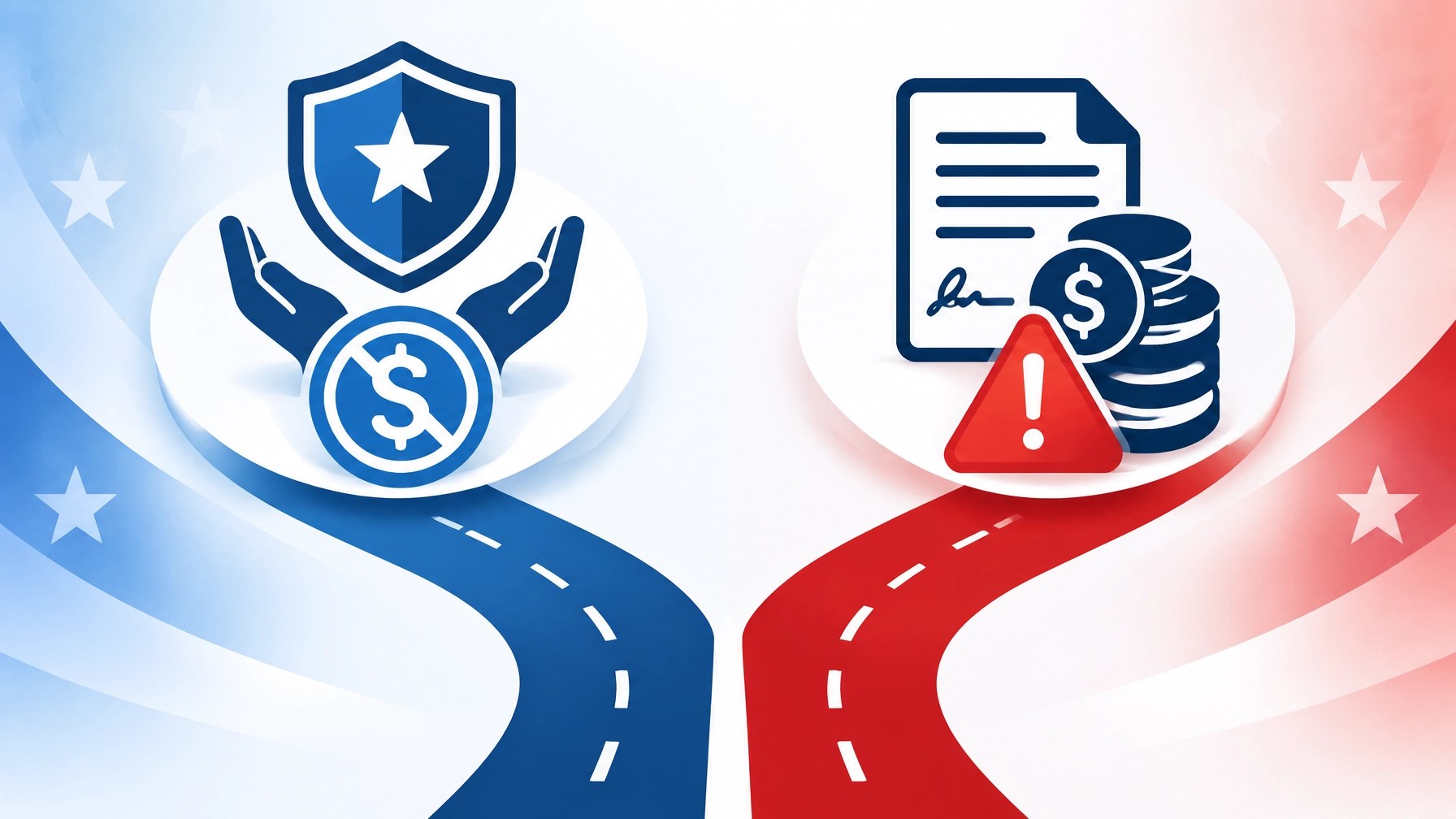
Use this protection checklist
Before sharing documents or signing an agreement:
- Ask, “Are you VA-accredited?”
- Verify the person or organization in the VA accreditation database.
- Never pay a percentage of your VA benefits for initial claims help before VA has decided the claim.
- Treat any guarantee of approval, a specific rating, or a specific dollar amount as a red flag.
- Never share your VA.gov, myHealtheVet, or other personal login credentials.
- Be cautious with unsolicited calls, texts, emails, or door-knocks about your VA benefits.
- Read the contract carefully. Look for the fee amount, “not accredited” language, and the solicitor’s name and address.
- Ask for the written acknowledgment explaining where free services are available.
- Contact a county or state veterans service office for a second opinion at no cost.
- If you feel pressured, stop. Legitimate help does not need to rush you.
- Report suspected fraud to VA at 1-800-827-1000 or VSAFE.gov.
A transparent approach to serving military families
The Hometown Hero Credit is a non-profit program and a partnership between Operation T.A.G. and PRMG, one of the nation’s top VA lenders. Operation T.A.G. is a 501(c)(3) nonprofit project of the High Desert Community Foundation and administers the program. PRMG is the lending partner that originates and underwrites the VA loan.
The program provides eligible veterans, active-duty service members, reservists, and Gold Star surviving spouses with a 2% credit up to $21,000 to help buy or refinance a home. There is no repayment required when the credit is used according to program terms.
The 2% credit up to $21,000 may be used for eligible closing fees, to buy down the interest rate, to pay real estate agent fees, or, in some cases, to pay down debt to help with VA loan qualification. It cannot be used for a down payment or for non-loan purposes. The credit is calculated on the loan amount, not the sales price. VA loans generally do not require a down payment.
PRMG’s published industry rankings include No. 14 nationally for VA loans in the 2026 Scotsman Guide. That is an industry ranking, not a guarantee of loan approval or outcome. Final approval, rates, terms, and eligibility are determined by PRMG and applicable program and lender requirements. The credit does not guarantee loan approval.
Operation T.A.G. does not sell veteran data, send unsolicited mail, or make unsolicited calls. We identify ourselves clearly and explain our nonprofit structure and funding relationships.
There is a difference between serving military families and just marketing to them. Veterans deserve that difference in every interaction.
Brett Stacy
National Director & Founder of the Hometown Hero Credit, a program of Operation T.A.G. (Tangible Act of Gratitude), and 501(c)(3) non-profit project of HDCF

Operation T.A.G. contact information:
760-456-8748 (24-hour Information Line)
OperationTAG.org
HometownHeroCredit.com
Separate educational homeownership resource
Download the free Mission Homeownership PDF e-book:

Educational information only. This article is not legal, financial, or tax advice. Federal accreditation rules and state legislation can change. Pending bills are not law. Verify accreditation directly with VA and consult an accredited representative or attorney about your own claim. Operation T.A.G. is not affiliated with or endorsed by the U.S. Department of Veterans Affairs.
Leave a Reply