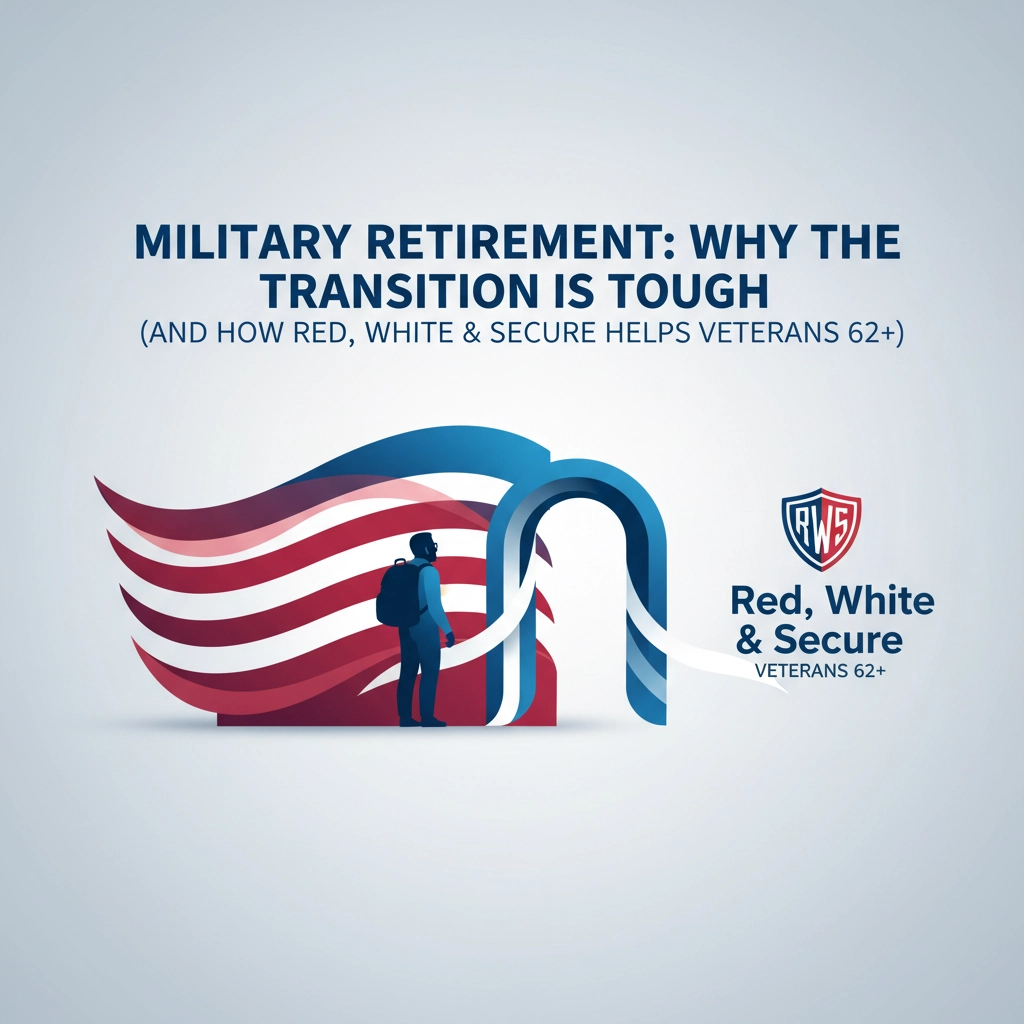
Welcome. If you're a service member, veteran, spouse, or Gold Star family member, thanks for being here. You matter. This page is for you.
Transitioning can be hard. Between 27% and 44% of veterans report difficulty readjusting to civilian life. For post-9/11 veterans, about half say the shift was somewhat or very difficult. If that’s you, you’re not alone.
Here’s how this post is organized:
- Section 1 focuses on the real-world hurdles of moving from active duty to civilian life—jobs, benefits, identity, and community.
- Section 2 focuses on the unique transition into retirement for veterans, including a veteran-focused 62+ reverse mortgage option that can support housing security and financial flexibility.
Section 1: Transitioning from Active Duty to Civilian Life
The move from a uniformed environment to the civilian world isn’t just a job change. It’s a full reset—work, family rhythm, money, and identity all shift at once. Below are the most common challenges and practical ways to start moving forward.
Employment and Skills Translation
About 33% of veterans say finding work is the top challenge after separation. It isn’t just getting a job—it’s finding meaningful work that values your experience.
- Civilian hiring often requires a resume, LinkedIn, and interviews very different from military boards.
- Translating MOS/AFSC/ratings to civilian skills takes practice.
- The average job hunt can take months. Plan for that timeline.

What to do next:
- Build a simple, one-page resume that highlights outcomes, not just duties.
- Set up or refresh your LinkedIn profile and connect with veteran-friendly employers.
- Use your local transition office, VA resources, and veteran service organizations for job coaching.
Benefits and Paperwork
There’s a lot to manage: VA disability claims, healthcare choices, life insurance options (VGLI or private), and Survivor Benefit Plan elections. Missing a step can cost time and money.
What to do next:
- Book a benefits review with a VSO (Veterans Service Officer).
- Create a checklist for healthcare, insurance, SBP decisions, and timelines.
- Keep digital copies of your DD214 and important records in one secure place.
Identity and Purpose
The military gives a clear mission and team. After separation, it’s normal to feel disoriented. You might ask, “Who am I now?” That’s not weakness. That’s transition.
What to do next:
- Set small goals for the first 90 days: fitness, a course, volunteering, or a certification.
- Join a local or online veteran community for peer support and accountability.
Finding Community and Routine
Civilian life can feel unstructured. People around you may not understand your experiences. Isolation creeps in if you’re not intentional.
What to do next:
- Schedule two weekly touchpoints: a veteran meetup and one family/friend activity.
- Build a simple daily routine: wake time, movement, job search block, connection time.
Money, Housing, and Planning
Pay can change fast when BAH, BAS, and special pays end. Housing costs and debt don’t. Financial stress adds pressure to everything else.
What to do next:
- Map a 6-month cash flow plan that reflects your new income.
- Prioritize housing stability first—know your payment, taxes, insurance, and emergency fund target.
- If buying or refinancing, compare options early so you’re not rushed later.
Mental Health and Readjustment
Combat exposure or traumatic events can make transition harder. Among veterans who experienced emotionally traumatic events, over half report difficulty readjusting. You are not alone, and help works.
What to do next:
- Call a trusted provider, Vet Center, or the Veterans Crisis Line if you need support now.
- Pair financial planning with mental health care—reducing stress in one area helps the other.
A quick bridge to retirement planning:
- If you’re 62 or older, transition can include a second shift—retirement. Housing and income planning change again at this stage. That’s where the next section can help.
Section 2: Transitioning into Retirement for Veterans 62+ — Red, White & Secure Reverse Mortgage
Retirement deserves stability and flexibility. Red, White & Secure is a veteran-focused reverse mortgage option designed to support both, with up to $6,000 in savings over a traditional HECM—so you can protect your home, free up cash flow, and make choices that fit your life.

Who It’s For
- Veterans, and eligible spouses, who are 62 or older
- Homeowners with equity who want to age in place
- Households that value payment relief and cash-flow flexibility in retirement
How It Works
Red, White & Secure lets you convert a portion of your home equity into cash—without selling your home or making monthly mortgage payments.
- You stay on title and keep ownership.
- The home must be your primary residence.
- You’re responsible for property taxes, homeowner’s insurance, and basic upkeep.
- You choose how to receive funds: lump sum, monthly payments, line of credit, or a mix.
How It’s Different From a Typical Reverse Mortgage
Red, White & Secure is built with military families in mind and offers up to $6,000 in savings. It focuses on:
- Veteran-savvy guidance that respects service culture and schedules.
- Coordination with your broader benefits picture (e.g., VA disability income, SBP considerations) so housing decisions fit your full financial plan.
- Options that support aging in place after years of PCS moves.
- A clear, no-pressure process and plain-language explanations.
What It Can Do for Your Retirement
- Eliminate monthly mortgage payments to reduce fixed expenses
- Create a standby line of credit for repairs, medical costs, or in-home care
- Fund accessibility upgrades to age in place
- Provide cash-flow breathing room while you protect other assets

Peace of Mind for You and Your Spouse
- Housing stability supports overall well-being—especially if you’re managing service-connected conditions.
- Spousal planning is part of the conversation so the home remains a safe, stable base for your family.
Combining Benefits for Maximum Impact
If you’re using programs like our Hometown Hero Credit (a 2% credit up to $21,000 to help military families buy or refinance homes), you may be able to combine benefits strategically.
For example, if you’re 62 or older and considering downsizing, you could use the Hometown Hero Credit to help purchase a smaller home, then use Red, White & Secure on the new property to eliminate monthly mortgage payments. That’s the kind of flexibility that can transform retirement.
Is Red, White & Secure Right for You?
This program tends to fit best if you:
- Own your home (or have significant equity)
- Are 62 or older
- Plan to stay in your home for several years
- Want to eliminate monthly mortgage payments
- Prefer flexible access to funds for expenses or opportunities
It may not be a fit if you expect to move soon or want to maximize the property left to heirs.
Taking the Next Step
You’ve earned peace of mind. If you’re exploring options for housing stability and retirement flexibility, we’re here to help—at your pace.
- Ask questions. Get clear answers.
- Review scenarios tailored to your goals.
- Decide what’s right for your family—no pressure.
You’ve spent years serving others. Now it’s okay to let a veteran-focused solution serve you.
Brett Stacy
National Brand Ambassador / Founder
Hometown Hero Credit Program
Phone: 760-456-8748
Website: www.HometownHeroCredit.com
Blog: www.HometownHeroCredit.blog

Leave a Reply