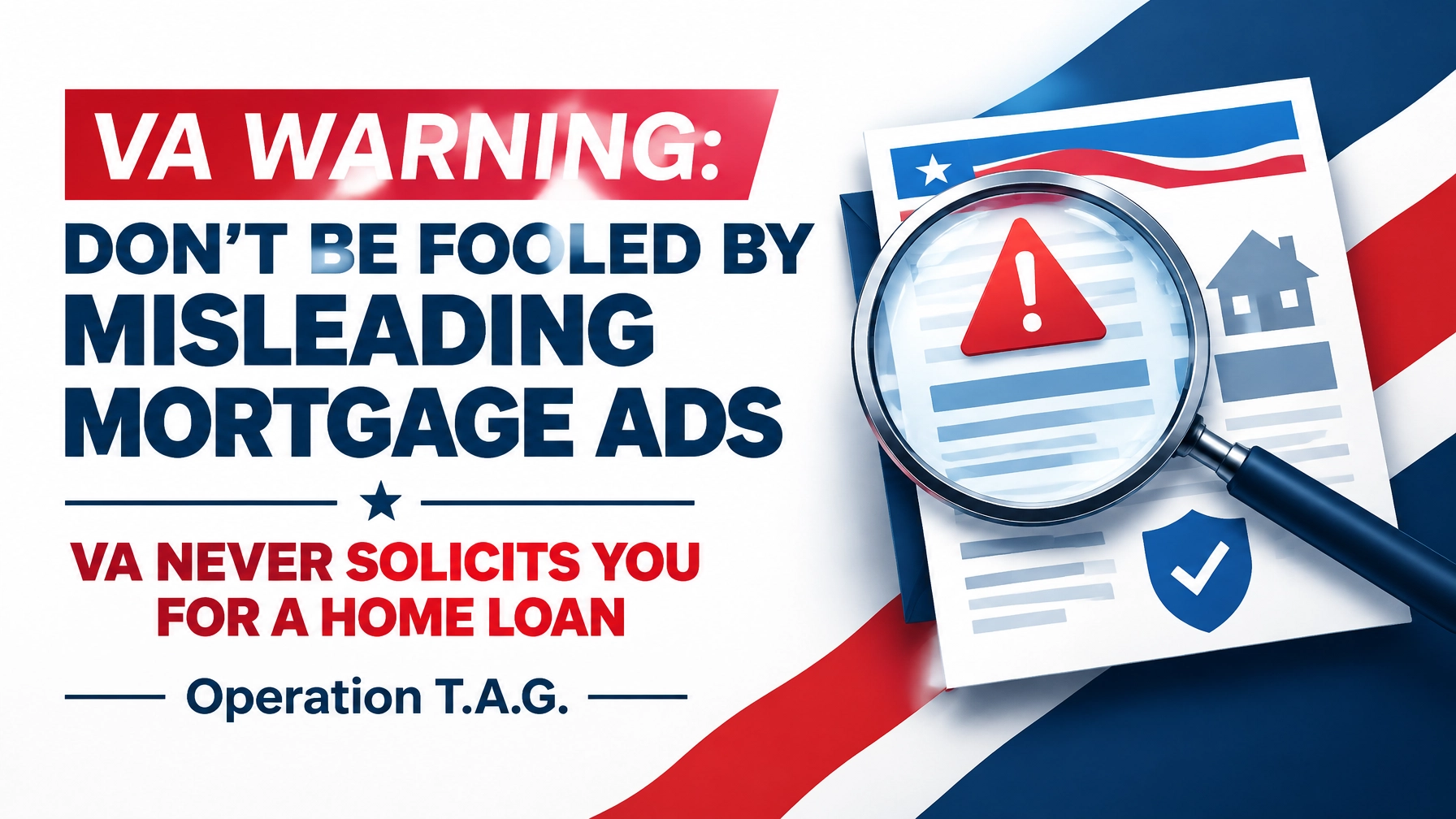
Buying or refinancing a home is one of the biggest financial decisions a military family will make. Your VA home loan benefit can provide meaningful advantages, which is one reason veterans and service members are often targeted by mortgage advertisers.
Some companies use misleading or predatory advertising to make a loan offer appear connected to the Department of Veterans Affairs. They may hide important terms, create false urgency, or suggest that the VA sent or endorsed the offer.
The VA issued a warning on September 8, 2026, titled “Don’t let misleading advertising upend your homebuying experience.” The message is straightforward:
“VA will never email or mail out solicitations or offers to Veterans seeking to refinance your mortgage or obtain a VA-guaranteed home loan.”
That means any email or mailing claiming to be from the VA and offering you a mortgage or refinance is a red flag.
How misleading VA mortgage advertising works
Misleading advertisements can look official at first glance. They may use:
- The VA name.
- A government-style seal.
- Official-looking logos or colors.
- Phrases such as “VA Interest Rate Reduction Department.”
- Warnings about “fines or imprisonment” under U.S. law.
- Statements suggesting that you have been selected for a special government offer.
These tactics are designed to make you believe the communication came directly from the VA or that you must respond immediately.
The VA states that some envelopes include warnings about fines or imprisonment to create a false sense of government authority. The message may look like an official notice when it is actually a private company’s advertisement.
Other advertisements may bury important information in fine print or on the back of a mailing. The large headline may promote an attractive rate or payment, while the smaller print explains that the rate is adjustable, applies only to certain terms, requires discount points, or comes with additional fees.
Watch for confusing interest rate language
An advertisement may show a very low interest rate without clearly explaining whether it is:
- A fixed-rate mortgage.
- An adjustable-rate mortgage.
- Available only for a shorter loan term.
- Available only after paying discount points.
- Available only to borrowers meeting specific requirements.
The advertised rate may not be the rate you qualify for. Review the full loan terms before assuming an offer will reduce your payment or save money.
Be careful with “skip a payment” claims
The VA’s earlier warning about home loan offers that sound too good to be true addresses common claims such as skipped mortgage payments, escrow refunds, cash back, no out-of-pocket costs, and guaranteed approval.
A skipped payment may not be a savings. Amounts owed between loans can be carried into a new loan balance and may accrue interest. Similarly, an escrow “refund” may simply be the remaining balance in an escrow account after closing. It may not be free money.
A legitimate lender should explain the short-term and long-term effect of any refinance. You should receive enough information to understand your new loan balance, payment, interest rate, fees, and closing costs.
What the VA will and will not do
The VA does not advertise mortgage products directly to you.
The VA will not:
- Email or mail you a solicitation to refinance.
- Email or mail you an offer to obtain a VA-guaranteed home loan.
- Endorse a specific mortgage lender.
- Sponsor a private lender’s advertising.
- Require you to respond to an unsolicited mortgage mailing.
VA-guaranteed home loans are issued by private lenders. Banks, credit unions, and mortgage lenders originate and underwrite the loans. Their requirements, rates, fees, and services may vary.
The VA’s role is to help eligible veterans and service members use the home loan benefit they have earned. You are free to choose the lender that best fits your situation.
If you have questions about your VA home loan benefit, visit the official VA housing assistance website, submit a VA ServiceNow ticket, or call the VA at (877) 827-3702.
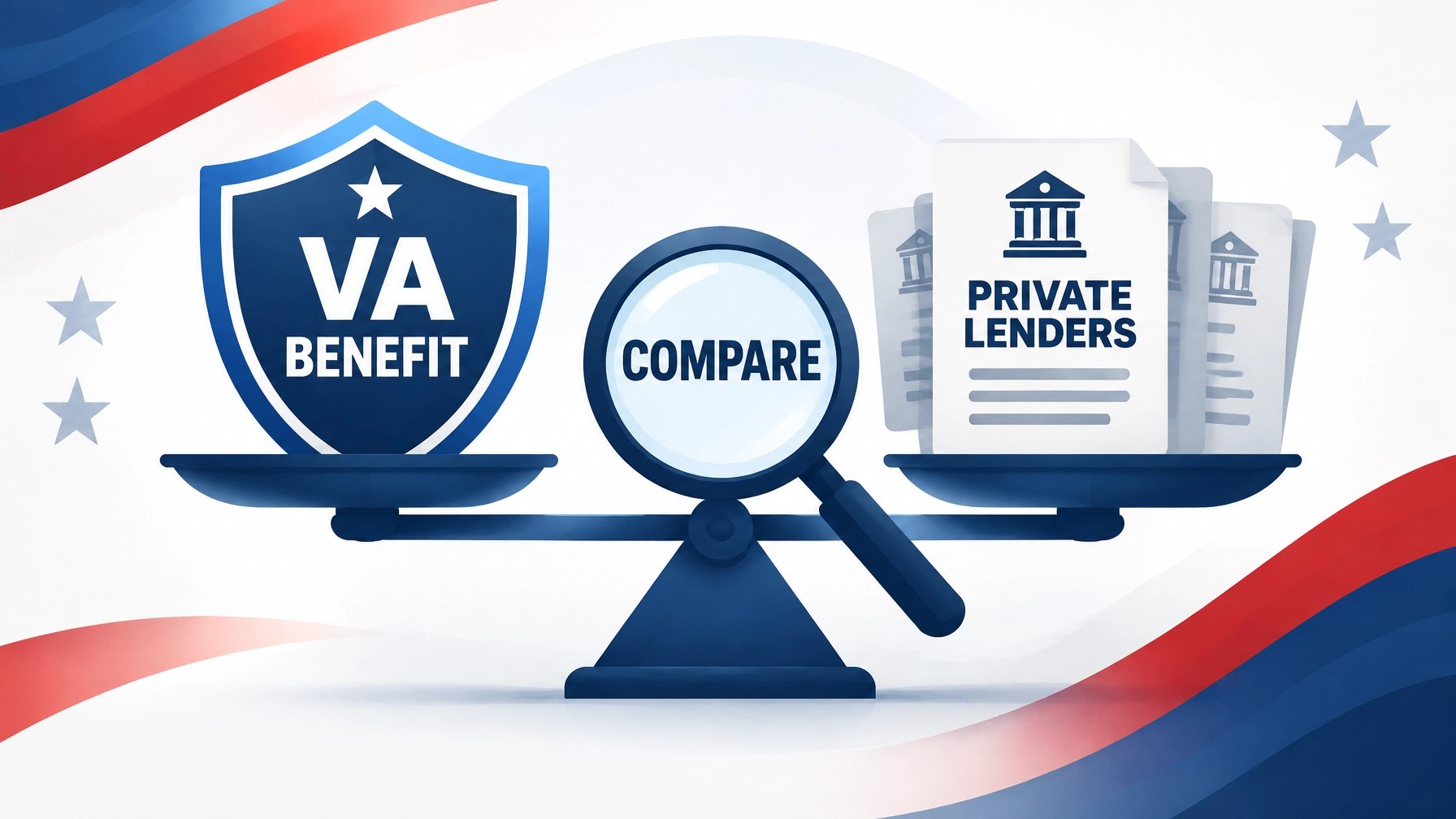
VA benefit versus private lender
It helps to separate these two parts of the process:
The VA benefit
The VA provides the home loan guaranty benefit for eligible borrowers. The benefit may help veterans and service members access financing through participating private lenders.
You can review eligibility information, Certificate of Eligibility instructions, loan types, and homebuying resources through VA.gov.
The private lender
The private lender handles the actual loan transaction. This includes reviewing your application, verifying income and assets, determining the interest rate, disclosing fees, and preparing closing documents.
Because private lenders offer different terms, you should compare them. You do not have to accept the first offer that mentions VA.
You can ask each lender for clear information about:
- The interest rate.
- Whether the rate is fixed or adjustable.
- The annual percentage rate.
- Origination fees and other lender fees.
- Closing costs.
- Discount points.
- The total loan amount.
- The estimated monthly payment.
- Whether costs are being added to the loan balance.
Five steps to protect yourself
The VA recommends a practical approach when reviewing mortgage advertising.
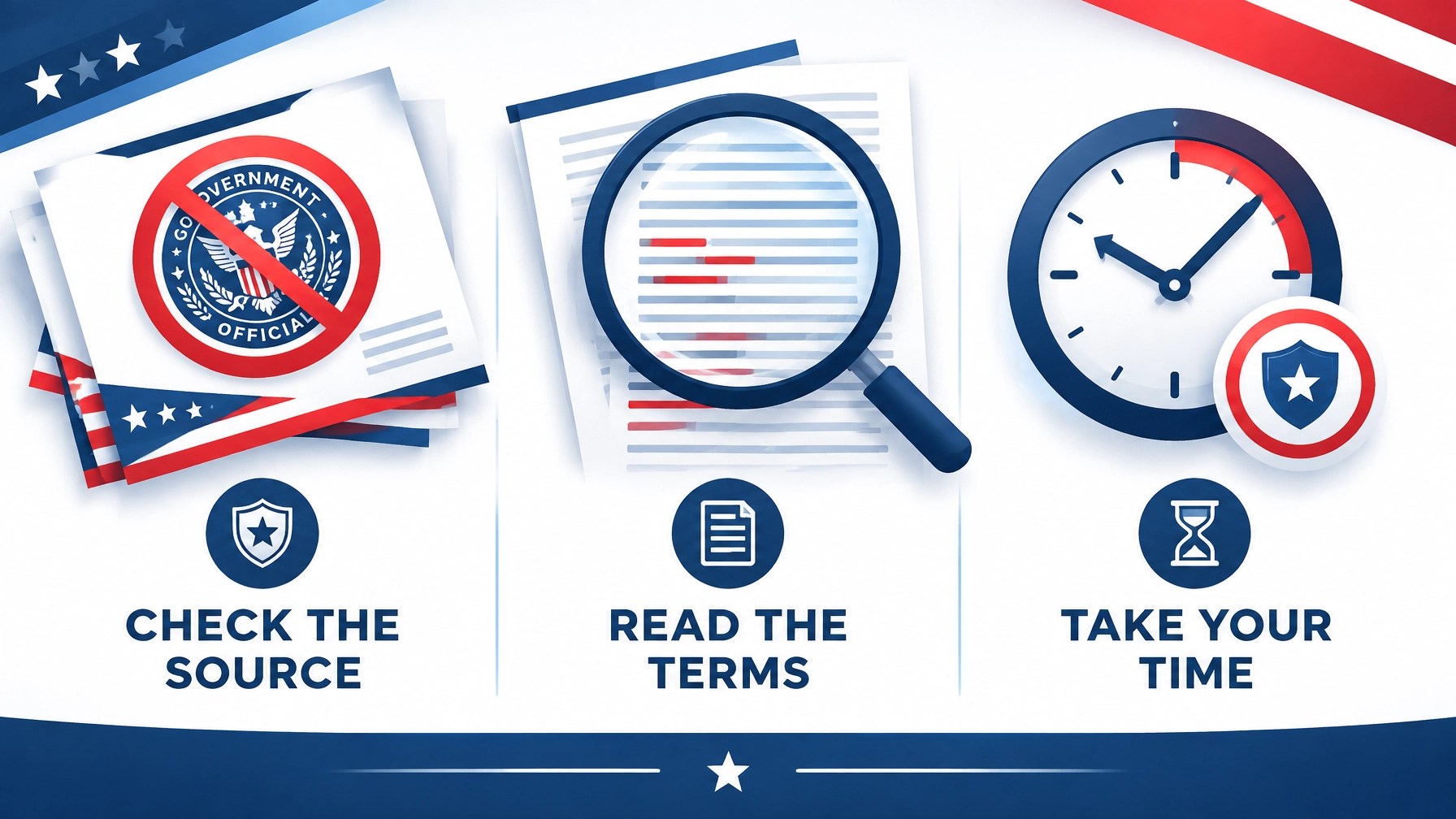
1. Be cautious
Treat unsolicited calls, emails, and mailings claiming to offer a special VA loan deal with caution. Remember that the VA does not contact veterans to sell financial products.
Review the fine print. Do not rely only on seals, logos, large headlines, or bold claims. Guaranteed ultra-low rates, fast approval, and urgent deadlines are common warning signs.
2. Do your research
Research the company before sharing personal information or signing anything.
Confirm that you are dealing with a real lender. Review the lender’s disclosures, licensing information, loan terms, fees, and closing costs.
Do not assume that a familiar-looking logo proves government involvement.
3. Compare offers
VA-guaranteed home loans are available through banks, credit unions, and mortgage lenders. Their offers can differ.
Request information from multiple VA-approved lenders. Compare the same details from each lender so you can evaluate the actual cost of each loan.
A lower advertised rate does not automatically mean a lower overall cost.
4. Take your time
Do not let a mailing, phone call, email, or salesperson force you to act before you understand the transaction.
The VA explains that mortgage fraud can involve a material misstatement, misrepresentation, or omission on a mortgage loan application. Provide accurate information and ask questions when something is unclear.
A legitimate lender should give you time to review documents before signing. If someone tells you that you must act immediately or discourages you from comparing offers, pause the process.
5. Report misleading solicitations
If you receive a communication that appears deceptive or suspect possible mortgage fraud, contact the VA.
You can:
- Submit a VA ServiceNow ticket.
- Call the VA Home Loan program at (877) 827-3702.
- Report suspected fraud and bad business practices to the Federal Trade Commission.
Keep copies of the mailing, email, envelope, screenshots, and any notes from phone calls. These details may help investigators understand the marketing practice.
A note about Operation T.A.G.
Operation T.A.G. is a 501(c)(3) nonprofit project of the High Desert Community Foundation. Its Hometown Hero Credit is a non-profit program partnered with the nations 10th largest residential lender, PRMG, providing eligible veterans, active-duty service members, reservists, and Gold Star surviving spouses with a 2% credit up to $21,000 toward eligible home purchase or refinance costs, subject to program rules.
The credit requires no repayment. It can be applied to:
- Pay eligible closing fees.
- Buy down the interest rate.
- Pay real estate agent fees.
- In some cases, help pay down debt to support VA loan qualification.
The credit cannot be used for a down payment or for non-loan purposes. It is calculated on the loan amount, not the sales price. VA loans generally do not require a down payment, subject to eligibility, lender requirements, loan limits, and other program rules.
Operation T.A.G. does not send unsolicited mortgage mail or sell veteran data. The organization identifies itself through its website and program materials. It is not affiliated with the Department of Veterans Affairs, and the VA does not endorse Operation T.A.G. or the Hometown Hero Credit.
There is a difference between serving military families and simply marketing to them. A tangible act of gratitude should be transparent, clearly identified, and focused on helping families understand their options.
Protect the benefit you earned
When a mortgage offer arrives, slow down. Check the source. Read every term. Compare lenders. Reach out to your favorite PRMG loan officer and ask them about the Hometown Hero Credit (or reach out to Operation T.A.G.). Contact us or the VA directly when you have questions.
Your VA home loan benefit belongs to you. You do not have to respond to a government-looking mailing, accept the first offer, or make a decision under pressure.
This article is educational information, not legal or financial advice. Verify every offer independently with the lender and the VA. Report suspected fraud to the VA and the Federal Trade Commission.
Brett Stacy
National Director & Founder of the Hometown Hero Credit, a program of Operation T.A.G. (Tangible Act of Gratitude), and 501(c)(3) non-profit project of HDCF

Operation T.A.G. Contact Information
Phone: 760-456-8748 : 24-hour Information Line
Website: OperationTAG.org
Hometown Hero Credit: HometownHeroCredit.com
Separate Educational Homeownership Resource
Download the free Mission Homeownership PDF e-book:

Leave a Reply