
The U.S. Department of Veterans Affairs released its 2026 Federal Benefits Guide on October 1, 2026. The VA home loan benefit is a lifetime benefit, so eligible Veterans may be able to use it more than once. Certain spouses, dependent children, surviving spouses, and caregivers may have benefits of their own. You can find the free guide on the VA website.
If you're a Veteran, service member, survivor, caregiver or military family member, it's worth knowing what's inside, because having earned a benefit and knowing that benefit exists are two very different things.
But rather than simply telling you to go read 116 pages, I want to highlight a few areas that caught my attention.
Because you, or someone you know, may have earned a benefit you aren't using.
1. Can Veterans Use Their VA Home Loan Benefit More Than Once?
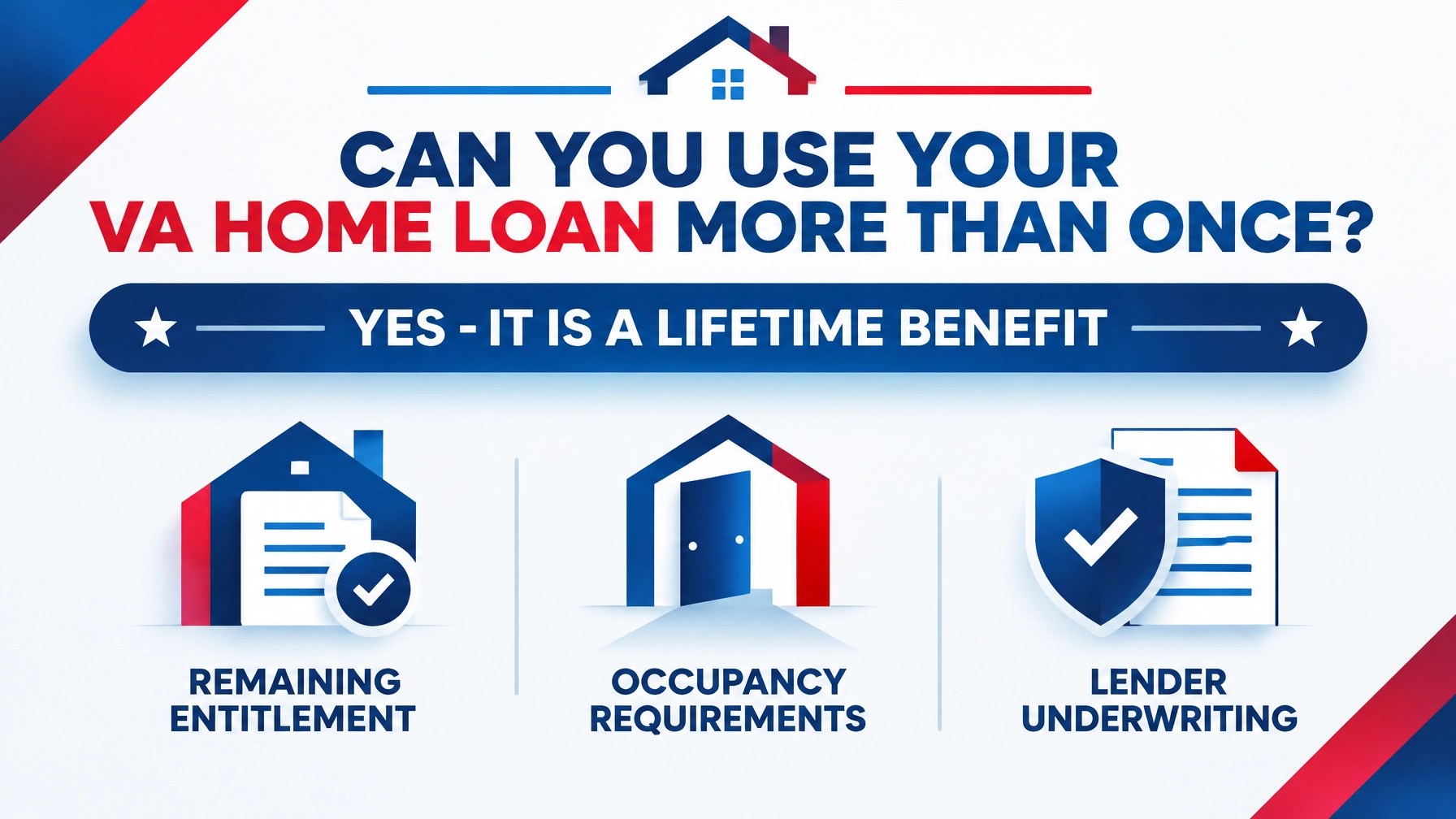
Yes. The VA home loan benefit is a lifetime benefit and, under certain circumstances, Veterans may use it more than once.
This is one of those misconceptions I continue to encounter.
Some Veterans believe that once they've used their VA home loan benefit, they've used it up.
That's not necessarily true.
In September, VA specifically reminded Veterans and surviving spouses that the VA-guaranteed home loan benefit can be used more than once. In some circumstances, a Veteran can even retain an existing home financed with a VA-backed loan and use remaining entitlement toward another primary residence. Remaining entitlement, occupancy requirements and lender underwriting requirements all matter.
Think about that for a moment.
Someone could have used their VA benefit years ago, assumed that chapter was closed, and never investigate whether that benefit could help their family again.
That's exactly why education matters.
There is also another homeownership resource military families may want to understand. The Hometown Hero Credit is a non-profit program and a partnership between Operation T.A.G. and PRMG, one of the nation's top VA lenders. Operation T.A.G. is the 501(c)(3) nonprofit project that administers the program, while PRMG is the lending partner that originates and underwrites the VA loan. The program provides eligible Veterans with an honorable discharge, active-duty service members, reservists, and Gold Star surviving spouses a 2% credit up to $21,000 toward eligible purchase or refinance costs, with no repayment required when used according to program terms. It is not limited to first-time buyers. The credit may be applied to eligible closing fees, buying down the interest rate, real estate agent fees, and, in some cases, debt reduction that supports VA loan qualification. It cannot be used for a down payment or non-loan purposes, and it is calculated on the loan amount, not the sales price. VA loans generally do not require a down payment. PRMG was ranked No. 14 nationally for VA loans in the 2026 Scotsman Guide. That is an industry ranking, not a guarantee of outcome. Final loan approval, rates, terms, and eligibility are determined by PRMG and applicable program and lender requirements. The credit does not guarantee loan approval. Operation T.A.G. is not a lender and does not approve, deny, or underwrite loans.
2. What Education Benefits Are Available to Veterans and Their Families?
VA education benefits may help eligible Veterans, service members and qualified family members pay for college, job training, housing, books and other education-related expenses.
Most people have heard of the GI Bill.
Fewer understand the range of education benefits that may be available.
Depending on eligibility, these can include the Post-9/11 GI Bill, Montgomery GI Bill programs, VET TEC 2.0 and other education and training opportunities. VA also provides programs for certain spouses, surviving spouses and dependent children.
For example, Survivors' and Dependents' Educational Assistance, often called Chapter 35, may provide education or job-training assistance to qualifying spouses and children of certain Veterans. The Fry Scholarship is another potential education benefit for eligible children and surviving spouses.
Sometimes the benefit isn't for the Veteran at all.
It's for the family that served alongside them.
3. Are There Employment and Career Resources for Veterans?
Yes. VA benefits extend beyond health care and disability compensation and include education, training, vocational rehabilitation and employment-related resources.
Transitioning out of military service can be difficult.
A service member can spend years becoming exceptionally good at a military occupation and then enter the civilian workforce wondering how those skills translate into a career.
The 2026 Federal Benefits Guide includes economic development and employment resources, while VA's education and training programs include career counseling and vocational rehabilitation services for eligible Veterans and service members.
That's worth remembering when talking with a Veteran who is struggling with the transition to civilian employment.
The answer isn't always simply, "Go find a job."
There may be resources available to help build the next career.
4. What Benefits May Be Available to Military Spouses, Dependents and Survivors?
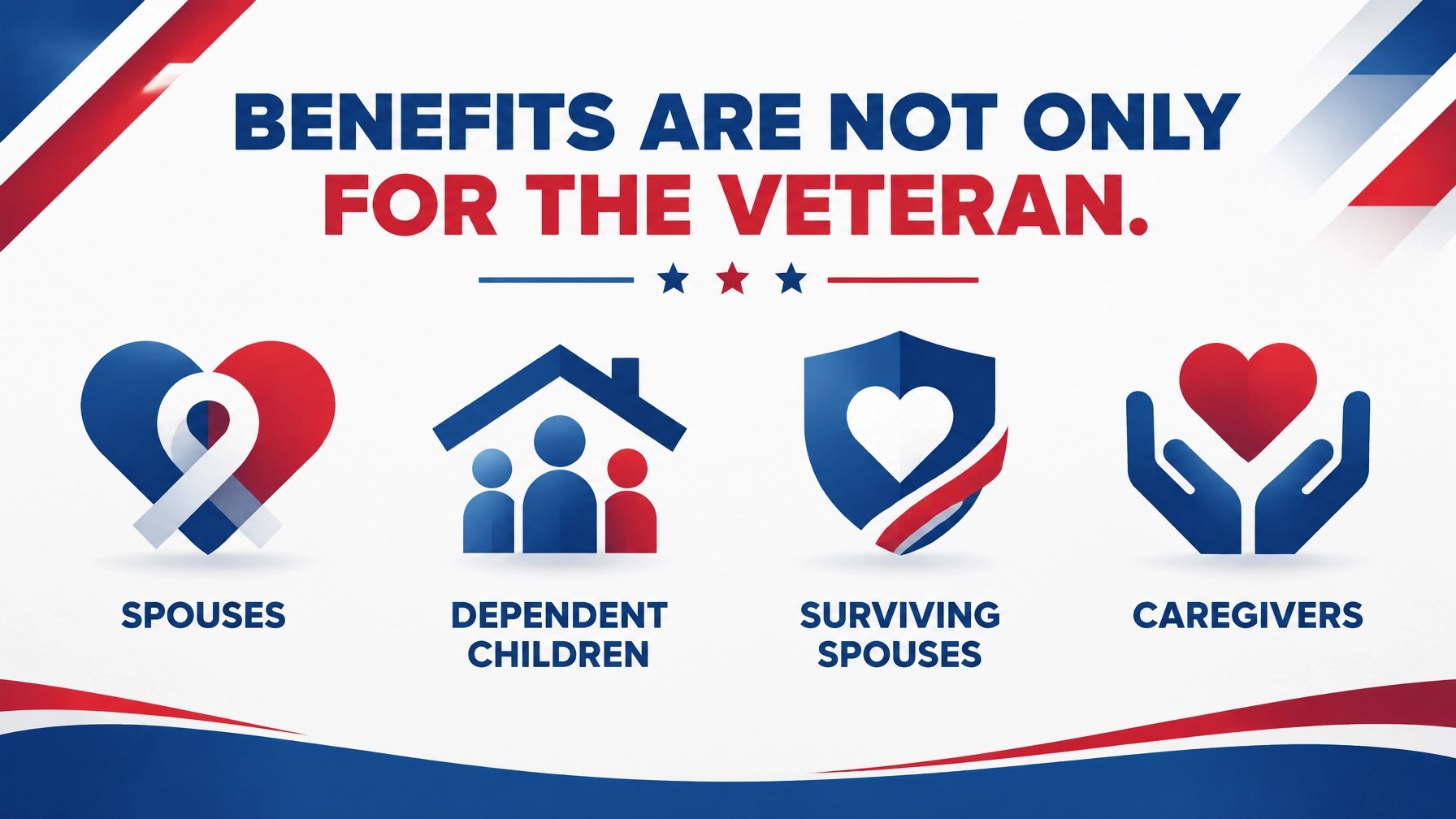
VA benefits aren't limited to Veterans themselves. Certain spouses, dependent children, surviving spouses and other eligible family members may qualify for benefits and services of their own.
This may be one of the most important things military families overlook.
Depending on the circumstances, benefits can include education and career assistance, survivor compensation or pension benefits, certain health-care programs and, for some surviving spouses, VA-backed home loan eligibility.
VA's Office of Survivors Assistance has even released a 2026 Survivor Benefits Booklet with updated information about financial, educational and health resources available to survivors.
When a service member serves, the entire family is affected.
We should make sure families understand that some benefits recognize their sacrifice as well.
5. What Other VA Benefits Should Veterans Know About?
The 2026 guide covers considerably more than the programs I've highlighted here.
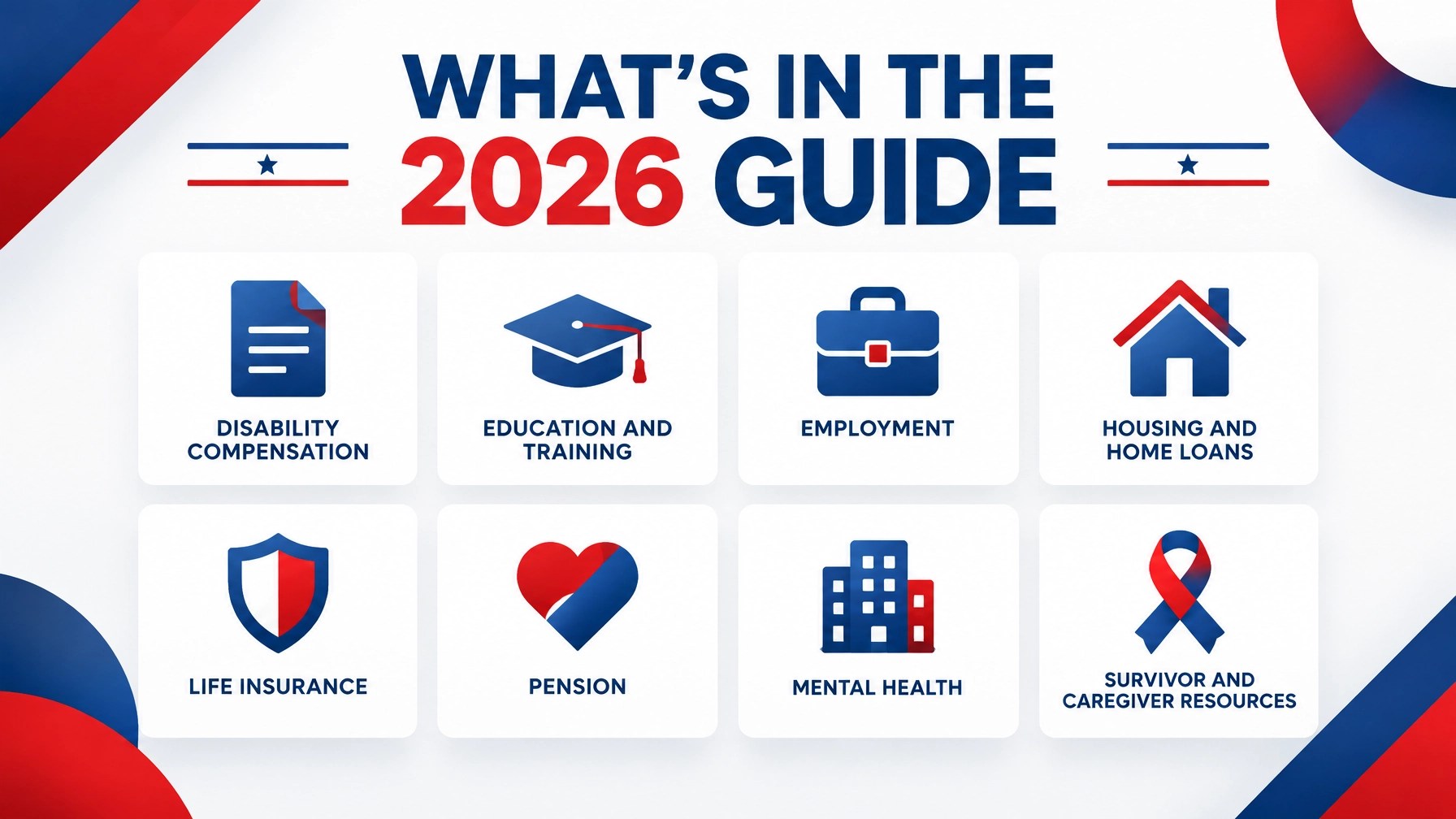
It includes information about:
- Disability compensation
- Pension and fiduciary services
- Education and training
- Employment and economic development
- VA home loan guaranty programs and housing assistance
- Life insurance
- Mental-health resources
- Benefits and resources for dependents, survivors and caregivers
You may already know about every benefit available to you.
But I wouldn't assume that.
And I certainly wouldn't assume the Veteran living next door does.
The Real Problem Isn't Always a Lack of Benefits
This is where this becomes personal for me.
I've spent a significant part of this chapter of my life working with military families. One lesson keeps repeating itself:
Sometimes the problem isn't that help doesn't exist.
The problem is that the people who earned the help don't know it exists.
That's one of the reasons my son Scott and I created Operation T.A.G., Tangible Act of Gratitude.
We're not the VA.
We're not trying to replace the VA.
And we're certainly not suggesting that every Veteran qualifies for every program mentioned in this article.
Our role is much simpler.
Help military families discover the benefits, programs, education and resources that may be available to them, and point them toward trustworthy places to learn more.
That philosophy also led us to create resources such as Mission Homeownership, a free guide written specifically to help military families better understand VA home loans and the homebuying process. And it is the philosophy behind the Hometown Hero Credit, our flagship non-profit homeownership program.
It all comes back to the same belief:
Military families deserve more than "Thank you for your service."
They deserve gratitude in action.
Where Can Veterans Find the 2026 VA Federal Benefits Guide?
The 2026 VA Federal Benefits Guide for Veterans, Dependents, Survivors, and Caregivers is available free from the U.S. Department of Veterans Affairs.
Download the 2026 VA Federal Benefits Guide.
I encourage you to look through it, even if you think you already know your benefits.
And perhaps more importantly, share it with another Veteran or military family.
You may know someone who doesn't need another "Thank you for your service."
They may simply need someone to tell them about a benefit they earned years ago and never knew was there.
Frequently Asked Questions
Is the VA home loan benefit a one-time benefit?
No. It is a lifetime benefit, and eligible Veterans may be able to use it more than once. Remaining entitlement, occupancy requirements, and lender underwriting requirements all matter. A lender can tell you what remains available in your specific situation.
What is the 2026 VA Federal Benefits Guide?
It is a free, 116-page guide released October 1, 2026 by the U.S. Department of Veterans Affairs. It covers benefits and services for Veterans, dependents, survivors, and caregivers, including disability compensation, education, employment, housing, life insurance, pensions, and mental-health resources. It is available at no cost from VA.
Do military spouses and surviving spouses have their own VA benefits?
Yes. Certain spouses, dependent children, and surviving spouses may qualify for benefits of their own. Those can include education and career assistance, survivor compensation or pension benefits, certain health-care programs, and VA-backed home loan eligibility for some surviving spouses. VA's Office of Survivors Assistance also publishes a 2026 Survivor Benefits Booklet.
Where can Veterans and military families go for free help understanding their benefits?
VA can be reached at 1-800-827-1000. Free VA-accredited help is available through Veterans Service Organizations including the VFW, The American Legion, DAV, and AMVETS, and through county and state veterans service offices. You can verify that anyone helping you is VA-accredited through the VA Office of General Counsel accreditation database.
About Brett Stacy and Operation T.A.G.
Brett Stacy is Founder and National Director of Operation T.A.G. (Tangible Act of Gratitude), a nonprofit organization dedicated to helping Veterans and military families discover benefits, education, resources and assistance that may be available to them. He is also co-author of Mission Homeownership, a homeownership guide created specifically for military families, and serves as National Brand Ambassador for the Hometown Hero Credit, Operation T.A.G.'s flagship homeownership program providing a 2% credit up to $21,000.
Learn more at OperationTAG.org.
Operation T.A.G. is a 501(c)(3) nonprofit organization and a project of the High Desert Community Foundation. Operation T.A.G. is not a lender. Certified mortgage loan partners, including PRMG, handle loan applications and provide information about rates, terms, and eligibility. Operation T.A.G. is not affiliated with or endorsed by the Department of Veterans Affairs.
Brett Stacy
National Director & Founder of the Hometown Hero Credit, a program of Operation T.A.G. (Tangible Act of Gratitude), and 501(c)(3) non-profit project

Contact Information
- 760-456-8748, 24-hour Information Line
- OperationTAG.org
- HometownHeroCredit.com
- VA: 1-800-827-1000
- VSAFE: 1-833-38V-SAFE
Free Mission Homeownership Educational Resource

Educational information only, not legal, financial, or benefits advice. Information about VA benefits and programs is summarized from the 2026 VA Federal Benefits Guide and other public sources and is subject to change. Eligibility varies by individual circumstance. Readers should verify current details with the VA or a VA-accredited representative. Not every Veteran qualifies for every program mentioned. Operation T.A.G. is a 501(c)(3) nonprofit and a project of the High Desert Community Foundation. Operation T.A.G. is not a lender and is not affiliated with or endorsed by the Department of Veterans Affairs.
There's a difference between SERVING military families…and just MARKETING to them.


Leave a Reply