If you are a veteran, active-duty service member, or military family member, you have probably seen the advertising.
“We understand veterans.”
“We’re here for those who served.”
“Military families are our mission.”
The message often comes with American flags, military imagery, and patriotic language.
There is nothing inherently wrong with a business earning a profit while serving veterans. Loan officers, real estate agents, and companies have employees to pay and services to provide.
But there is an important question worth asking:
Are military families being served: or are they being used as a profitable marketing audience?
That question has received renewed attention following a lawsuit involving Veterans United Home Loans. Regardless of how that case is ultimately resolved, it raises a broader issue about trust, transparency, and what genuine support should look like.
The lawsuit in plain English
Veterans United Home Loans is a private mortgage company that focuses heavily on VA loans. It is not the Department of Veterans Affairs and is not a government agency. Its name and branding should not be confused with official VA programs.
Veterans United also has an affiliated real estate operation called Veterans United Realty.
According to reporting about a proposed class action filed in federal court, Veterans United Realty provided homebuyer leads to participating real estate agents. When a referred buyer purchased a home, the agent could pay approximately 35% of the agent’s commission to a Veterans United-affiliated company.
A referral fee between real estate brokers is not automatically illegal. The purpose and structure of the arrangement matter.
The lawsuit alleges that participating agents were encouraged to keep the veteran’s mortgage with Veterans United Home Loans. It further alleges that sending a borrower to another lender could affect the agent’s access to future leads.
Put simply, the borrowers’ allegations describe an arrangement that worked like this:
- An affiliated company provided potential buyers to real estate agents.
- The agent paid approximately 35% of the commission when a referred buyer closed.
- The agent was allegedly expected to help keep the buyer’s mortgage business within the same company network.
- Agents who did not follow that expectation allegedly risked losing future leads.
The plaintiffs claim these practices created an undisclosed financial conflict and caused borrowers to pay more than they might have paid after comparing other lenders.
Those are allegations. They have not been proven.
Veterans United disputes the claims and maintains that its business arrangement complies with federal law. The court’s decision to allow part of the case to continue is not a finding of guilt or liability. It means the court determined that some claims could proceed for further consideration.
You can read additional reporting from Mortgage Professional America. The legal process will determine what happened and whether any laws were violated.
The larger issue is trust
The lawsuit is about specific parties and specific allegations. The larger issue is one every military family should understand.
When a real estate agent, lender, or other professional recommends a company, ask:
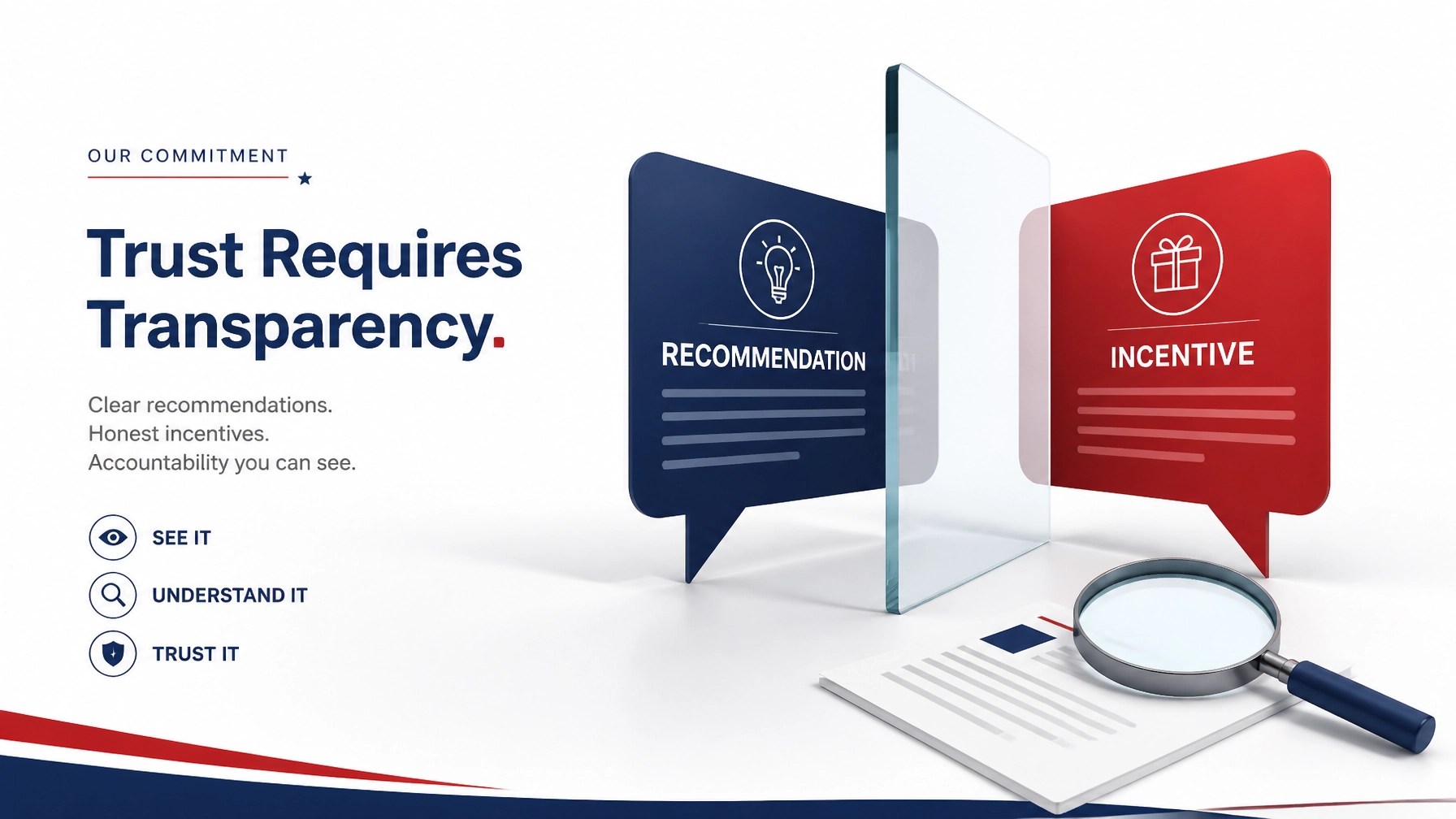
Is this recommendation based on what is best for my family: or is there a financial incentive behind it?
Buying or refinancing a home is one of the largest financial decisions many families will make.
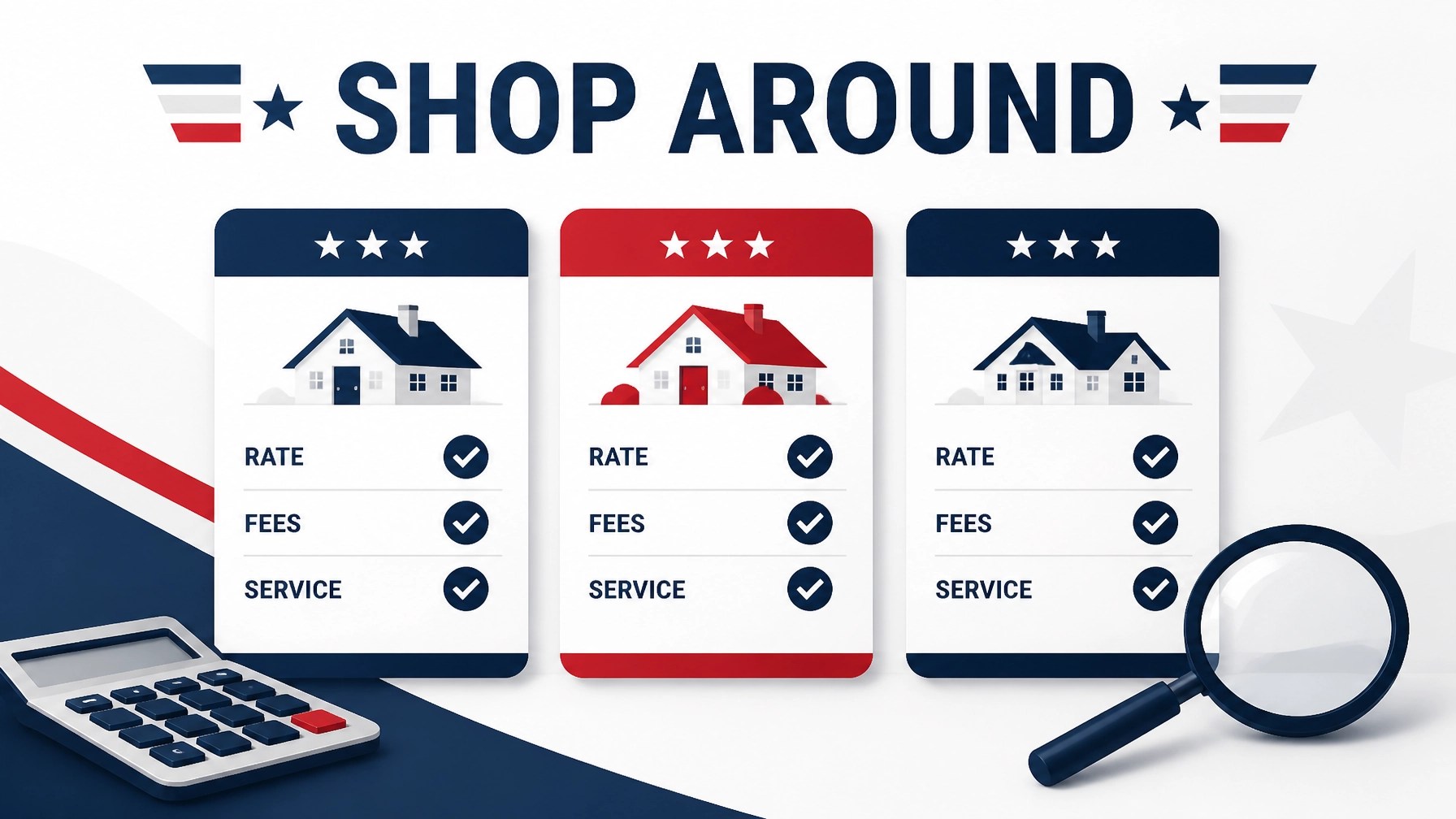
Rates matter.
Fees matter.
Closing costs matter.
Service matters.
The ability to compare lenders matters.
A recommendation may be completely appropriate. A referral relationship may be properly disclosed and legally structured. But military families should not have to guess whether a recommendation is independent or financially influenced.
Transparency gives consumers the information they need to make an informed decision.
Your VA benefit is not the same as your lender
A VA loan is a benefit earned through service. A mortgage lender is a private business.
For most VA-backed mortgages, the Department of Veterans Affairs does not directly lend the money. Private banks, mortgage companies, and credit unions generally make the loans, while the VA guarantees a portion of eligible loans.
The official VA home loan page explains the basic structure and eligibility process.
This distinction matters because one lender’s VA loan is not automatically identical to another lender’s VA loan.
Lenders may differ in:
- Interest rates
- Origination charges
- Closing costs
- Lender credits
- Underwriting procedures
- Communication and service
- Experience with your specific financial situation
You have the right to shop around.
A preapproval from one lender does not require you to close with that lender. A referral from a real estate agent does not make that lender your only option. A military-sounding company name does not establish government affiliation.
For many eligible borrowers, VA loans generally do not require a down payment. That does not mean the loan has no costs or that every lender will provide the same terms.
Ask one direct question
If someone recommends a lender, real estate company, insurance provider, or other service, ask:
“Does anyone receive money, leads, referrals or another financial benefit if I use this company?”
That is not being difficult.
It is being an informed consumer.
You can also ask:
- Is this company affiliated with the Department of Veterans Affairs?
- Does anyone receive compensation if I choose this lender?
- Are there lender credits available?
- How is the loan officer or agent compensated?
- Can I compare this Loan Estimate with another lender’s Loan Estimate?
- What happens if I choose a different company?
You do not owe any business your choice simply because its advertising includes military language.
Patriotism creates responsibility
Veterans and military families are often more likely to trust a company that appears to understand their service.
That trust is valuable. Businesses know it.
A company can create an emotional connection before discussing a rate, fee, or contract simply by using words such as “veteran,” “military,” or “service.” Flags and military imagery can reinforce that connection.
There is nothing inherently wrong with military-focused branding. A company may genuinely specialize in serving veterans.
But patriotism should not replace transparency.
If a business builds its model around America’s military families, those families should be more than a target market. They should receive clear information, honest choices, and meaningful service.
Profit is not the problem
I spent my career in the mortgage industry. I believe loan officers should be compensated. Real estate agents should be compensated. Companies must earn revenue to operate.
Profit is not a dirty word.
The problem begins when profit is placed ahead of the person while the company advertises that the person comes first.
Those are two very different things.
Genuine service means educating military families. It means showing them their options. It means encouraging them to compare rates and fees. It means disclosing financial relationships clearly.
It also means being willing to recommend a different solution when that solution is genuinely better for the family.
That is what integrity looks like in a service-based business.
Gratitude over profits
This is one reason we created Operation T.A.G.: Tangible Act of Gratitude.
Operation T.A.G. is a 501(c)(3) nonprofit project of the High Desert Community Foundation dedicated to education, financial support, and community partnership for military families.
The Hometown Hero Credit is a non-profit program of Operation T.A.G. It provides eligible veterans, active-duty service members, and Gold Star surviving spouses a 2% credit up to $21,000, with no repayment required, subject to program eligibility and applicable rules.
The 2% credit up to $21,000 can help an eligible military family buy or refinance a home. It may be applied toward:
- Closing fees
- Buying down the interest rate
- Real estate agent fees
- In some cases, paying down debt to help with VA loan qualification
The credit cannot be used for a down payment or for non-loan purposes. It is calculated on the loan amount, not the sales price. Since VA loans generally do not require a down payment, families should ask qualified professionals how the credit may fit within their specific transaction.
The Hometown Hero Credit is a non-profit program, but that does not mean it is automatically the right option for every family. Military families should still compare loan terms, review disclosures, and seek qualified guidance.
The point is simple: gratitude should have something tangible behind it.

What military families should do
Before choosing a lender or service provider:
- Ask about financial incentives. Use the direct question: “Does anyone receive money, leads, referrals or another financial benefit if I use this company?”
- Request multiple Loan Estimates. Compare the same type of loan and review the interest rate, projected payments, closing costs, and cash needed to close.
- Ask about lender credits. Understand whether a credit reduces your upfront costs and whether it affects your interest rate.
- Ask how professionals are compensated. Request a clear explanation of agent, loan officer, referral, and other compensation arrangements.
- Verify VA-related claims. Use VA.gov to confirm official information about eligibility and VA loan programs.
- Do not assume affiliation. A company name, logo, flag, or military message does not make a business part of the Department of Veterans Affairs.
- Take time to compare. A referral can be a starting point. It should not be the end of your research.
The allegations in the Veterans United lawsuit still must be proven, and Veterans United deserves the opportunity to defend its practices. This article is educational and is not legal or financial advice. Consult qualified legal, financial, lending, and real estate professionals about your individual circumstances.
If a company says it supports veterans, it should be ready to explain how.
Not what its advertising says.
Not how many flags appear on its website.
Not how often it says, “Thank you for your service.”
The question is:
What tangible benefit are military families receiving because you chose to serve them?
That is the difference between marketing gratitude and putting gratitude into action.
Brett Stacy
National Director & Founder of the Hometown Hero Credit, a program of Operation T.A.G. (Tangible Act of Gratitude), and 501(c)(3) non-profit project of HDCF.

Websites: www.OperationTAG.org and www.HometownHeroCredit.com
Phone: 760-456-8748 : 24-hour Information Line
Separate Educational Resource
Download the free Mission Homeownership PDF e-book for educational information about the homeownership process.

Leave a Reply