Subscribe

Subscribe to get our the latest stories in your inbox.

  • They See a Veteran. Scammers See a Payday.

    By Brett Stacy, Founder, Operation T.A.G.

    There is something especially disgraceful about using a veteran’s military service to gain their trust, and then stealing from them.

    These criminals know the language. They talk about earned benefits, military families, and helping those who served. They decorate their messages with flags and official-looking seals. They understand that an offer of financial assistance can get someone’s attention when money is tight.

    Then they use that opening to take what belongs to the veteran.

    With Veterans Day approaching, we need to talk about protecting the people we say we appreciate. Sharing a warning, helping someone verify an offer, or connecting a family with legitimate assistance is a tangible act of gratitude.

    And right now, those actions matter.

    The offer looks helpful. The consequences are real.

    In an October 14 warning, the U.S. Department of Veterans Affairs described a fraudulent Facebook post advertising a “Veterans & Retired Seniors Grant Program.” Some veterans provided direct-deposit information, allowing criminals to redirect their VA payments.

    VA also warned that artificial intelligence can make fraudulent images, voices, and videos appear convincing. A familiar face or authoritative-sounding voice is not proof that an offer is real.

    Think about what a stolen benefit payment can mean to a family counting on that money.

    The mortgage still comes due. Groceries still cost money. The electric company still expects payment. Meanwhile, the veteran has to spend time untangling something that should never have happened.

    The theft reaches beyond a bank account. It can take away someone’s sense of security and make them reluctant to trust the next person offering legitimate help.

    That should concern all of us.

    Patriotic packaging proves nothing.

    A flag on a postcard does not establish credibility

    The Federal Trade Commission (FTC) warned about postcards promoting a supposed “Veterans Savings Program.” The program described in those mailers does not exist. The postcards reference real benefits and urge recipients to call quickly, creating an opportunity to collect personal or financial information.

    A flag on a postcard does not establish credibility. Neither does knowing your military background, using a government-style logo, or calling you a hero.

    Before sharing anything, take a breath and verify the organization independently. Be especially cautious when someone pressures you to act immediately, asks for sensitive account information, or insists that an offer must remain secret. End the conversation and contact the organization through a trusted number or website you find yourself. VA specifically recommends independent verification.

    You do not owe an unsolicited caller your trust.

    If it happened to you, speak up

    Shame helps the criminal.

    If someone deceived you, the responsibility belongs to the person who deliberately set out to steal from you. Tell someone you trust and begin reporting what happened.

    • For questions about a suspicious VA benefits offer, call the VA Benefits Hotline: 800-827-1000.
    • Report suspected VA-related fraud at VSAFE.gov or call 833-38V-SAFE (833-387-2333).
    • Report fraud to the FTC at ReportFraud.ftc.gov.

    Use independently verified channels, not contact information supplied in the suspicious message.

    Family members and friends have a responsibility here, too. If a veteran tells you something went wrong, help them take the next step. A lecture about what they should have noticed will not recover a dollar.

    Real help deserves attention

    Warnings are useful, but people also need somewhere legitimate to turn.

    One organization worth knowing is Soldier On, whose work addresses veteran homelessness and housing instability. Its website describes no-cost legal assistance for veteran residents involving matters such as debt, taxes, child support, eviction, and landlord-tenant disputes. Permanent housing residents also receive estate-planning services, including wills, healthcare proxies, and powers of attorney.

    Soldier On also describes free financial counseling through its collaboration with Money Management International and Freddie Mac. Counseling topics include credit, debt, financial stability, and preparation for homeownership.

    Learn more at SoldierOnSuccess.org or call 888-288-3184. Soldier On’s housing outreach serves veteran families in Delaware, Massachusetts, New York, New Jersey, and Pennsylvania. Contact Soldier On directly to confirm eligibility, service area, and available assistance, particularly for legal services, which its website describes in the context of its veteran residents. You can also learn more at WeSoldierOn.org.

    These resources belong in this conversation because financial pressure can make a promise of quick relief especially tempting. Knowing where to find legitimate support gives a family another place to turn before trusting a stranger’s offer.

    Gratitude carries a responsibility

    At Operation T.A.G., we believe gratitude should lead to action. T.A.G. stands for Tangible Act of Gratitude, and sometimes that act is as straightforward as helping a veteran check whether a message is real.

    Captain Gratitude represents that commitment: standing up for those who stood up for us.

    This Veterans Day, check on someone. Share this warning. Help a family member verify an unfamiliar offer. Make sure the veterans in your life know they can ask for another set of eyes without being judged.

    The people targeting them are counting on urgency, confusion, and silence.

    We can answer with patience, clear information, and action.

    Gratitude isn’t a certification. It’s something you do. Gratitude over profits every day of the year.

    FREE BOOK DOWNLOAD: Mission Homeownership

    For military families pursuing homeownership, Brett Stacy’s free guide Mission Homeownership explains VA home loans and the homebuying journey. Scan the QR code on the card or use the download link. The link goes straight to the download form.
    Free book download: Mission Homeownership by Brett Stacy. Scan the QR code to get your copy, a guide to VA home loans for military families.

    Frequently asked questions

    Is there a “Veterans & Retired Seniors Grant Program”?

    No. VA warned on October 14, 2026, that a Facebook post using that name was fraudulent. Some veterans who engaged provided direct-deposit information that was used to redirect payments.

    Is the “Veterans Savings Program” real?

    No. The FTC has warned that postcards promoting it are a scam. Don’t call the number on the postcard.

    What should I do if a suspicious offer arrives?

    Don’t share information. End the conversation and verify independently. Contact the VA Benefits Hotline at 800-827-1000, check VA.gov directly, or report the offer at VSAFE.gov / 833-38V-SAFE and ReportFraud.ftc.gov.

    I already gave information to a scammer. What now?

    Act quickly. Contact the VA Benefits Hotline at 800-827-1000, report it at VSAFE.gov, and tell someone you trust. Shame helps the criminal; speaking up doesn’t.

    Who is Soldier On?

    Soldier On is an organization addressing veteran homelessness and housing instability. It offers no-cost legal assistance to veteran residents, estate-planning services for permanent housing residents, and free financial counseling through Money Management International and Freddie Mac. Contact Soldier On directly at SoldierOnSuccess.org / 888-288-3184 or WeSoldierOn.org to confirm eligibility and service area.

    What is Operation T.A.G.?

    Operation T.A.G. is a 501(c)(3) nonprofit military homeownership support organization, not a lender, founded by Brett Stacy and his son Scott. We are dedicated to helping, informing, supporting, and protecting military families. Operation T.A.G. connects families with licensed lending partners.
    Operation T.A.G. official logo

    Brett Stacy
    Founder & National Director, Operation T.A.G.™
    National Brand Ambassador, Hometown Hero Credit™
    Military Family Advocate | Author | Speaker
    OperationTAG.org | HometownHeroCredit.com

    Operation T.A.G. is a 501(c)(3) nonprofit organization, not a lender. All mortgage applications, loan terms, rates, and lending services are provided by appropriately licensed lending partners. PRMG NMLS #75243.
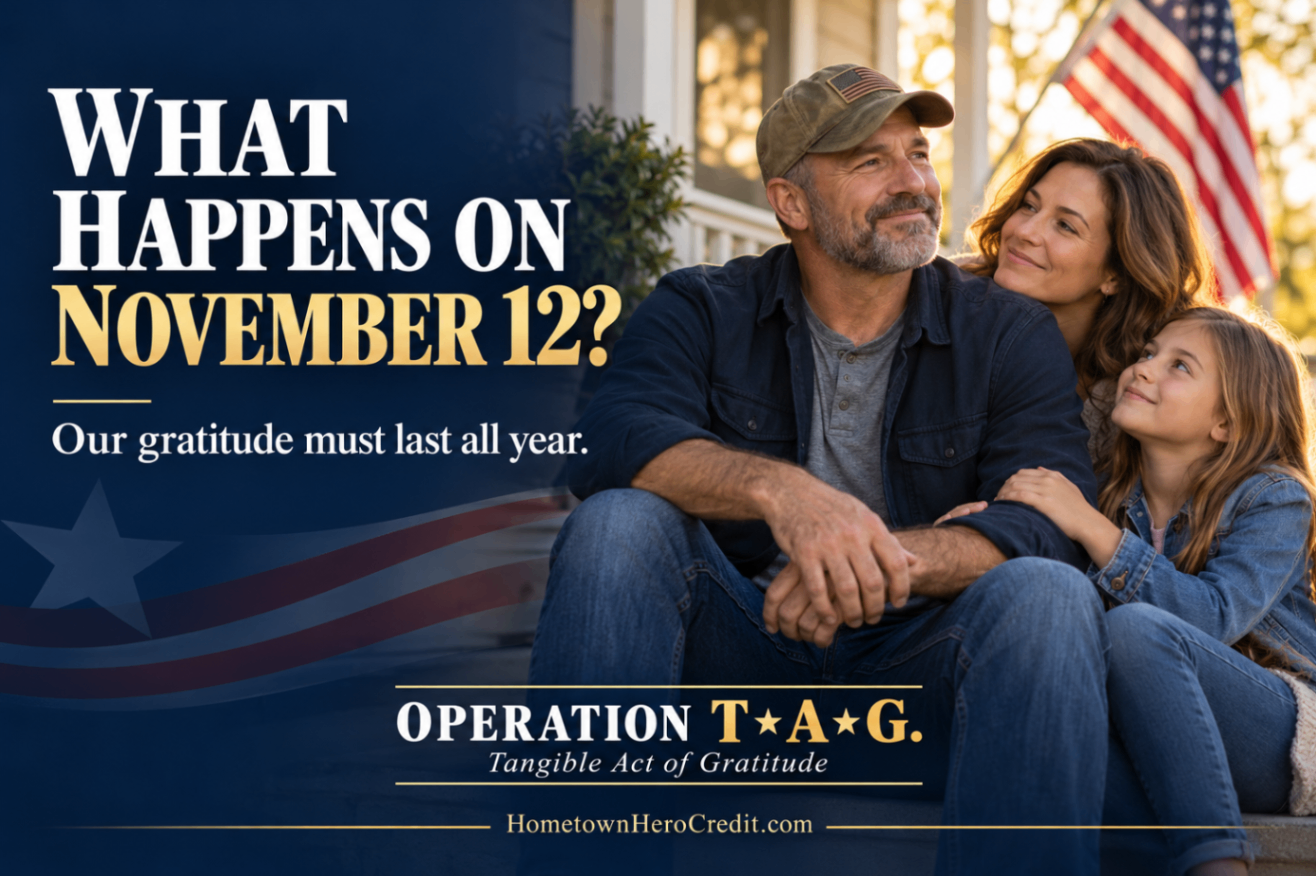
  • Let’s Have an Honest Conversation About Veterans Day

    LET'S HAVE AN HONEST CONVERSATION ABOUT VETERANS DAY.

    I saw this graphic promoting free meals and special offers for veterans. Many people will see it and feel grateful. I see it and wonder: What happens on November 12?

    A meal can mean something. So can the handshake, and the chance to sit with others who understand what service means. I respect the employees and business owners who make those moments personal.

    But I'm frustrated by how easily military appreciation becomes a marketing season.

    Our nation's veterans and their families deserve a commitment that continues after the signs come down. Their sacrifices don't follow a promotional calendar. Neither should our gratitude.

    This graphic alone cannot tell us everything these businesses do throughout the year. Still, it raises a question every business, including those of us who talk publicly about serving military families, should answer:

    What are we doing for veterans the other 364 days?

    Are we hiring them and supporting their spouses' careers? Making meaningful assistance available year-round? Supporting local veteran organizations consistently? Listening to what military families actually need, and following through?

    We need to stop treating Veterans Day as an opportunity to market and start treating it as a moment to examine our commitment.

    That challenge applies to me, too. At Operation T.A.G., our name stands for Tangible Act of Gratitude. We have a responsibility to live up to those words through our actions.

    Gratitude over profits means being willing to give something meaningful (our time, our resources, or a portion of what we earn) to help those who served.

    We all can do better. Let's make a commitment we'll still be keeping in February, June, and September.

    What would meaningful, year-round support look like to you? Especially if you're a veteran or military spouse, I'd like to hear your perspective.

    GRATITUDE OVER PROFITS. EVERY DAY OF THE YEAR.

    Year-round gratitude has to show up in what we do

    A Veterans Day meal or special offer can be a sincere gesture. The question is not whether these moments matter. They can. The question is whether they are part of a deeper, continuing commitment, or the whole commitment.

    Businesses can begin by asking veterans and military spouses what support would be useful, rather than assuming. Some veterans may welcome public recognition; others may prefer privacy. The U.S. Chamber of Commerce suggests businesses consider veterans’ preferences while finding practical ways to support them, from workplace recognition to veteran hiring, year-round perks, and support for veteran-owned businesses. Read its suggestions for honoring veterans in business.

    A meaningful commitment could include:

    • Hiring veterans and supporting their transition into civilian careers.
    • Recognizing that military spouses may need flexibility and career support, too.
    • Building lasting relationships with local veteran organizations.
    • Offering useful assistance or benefits throughout the year, not just during a promotional window.
    • Listening to military families and following through on what they say they need.
    • Being transparent about how a promotion or donation benefits veterans.

    These are starting points, not a checklist that fits every organization. What matters is that actions are thoughtful, consistent, and accountable. If a business says it is giving a portion of sales, it can explain the commitment clearly and share what was contributed. If it offers support to veterans at work, it can ask whether that support is actually working.

    A community volunteer group packs supplies beneath the words “365 Days of Gratitude” and “Honor their service through everyday action”

    Gratitude isn't a certification. It's something you do.

    Appreciation is not proved by a seasonal graphic, a slogan, or a single day of visibility. It is demonstrated in the choices an organization makes after the holiday has passed.

    That standard includes me and Operation T.A.G. We have a responsibility to keep asking whether our actions reflect our purpose. Operation T.A.G. is a 501(c)(3) nonprofit military homeownership support organization founded by me and my son Scott. We are not a lender; we are dedicated to helping, informing, supporting, and protecting military families. You can learn more about our mission.

    One example of our work is the Hometown Hero Credit™, which may provide eligible military families with a credit toward eligible home-purchase or refinance closing costs. It is offered through licensed lending partner PRMG, and eligibility and program guidelines apply. The details matter. So does being clear about who provides the lending services and what the assistance does, and does not, cover.

    But this post is not a pitch for one program. It is a call to examine whether any organization’s stated gratitude is matched by meaningful action. Standing up for those who stood up for us means taking that responsibility seriously every month.

    Keep the conversation going

    If you are a veteran or military spouse, I want to hear your perspective. What support has made a real difference to you or your family? What do you wish businesses understood? What would you want to see continue long after Veterans Day?

    You can leave a comment or reach out to Operation T.A.G.. You may also call 760-456-8748. We welcome honest feedback and questions.

    Veterans Day can be a moment of recognition. It can also be a moment to make a commitment, and then keep it in February, June, September, and every day in between.

    FREE BOOK DOWNLOAD: Retirement Reset

    Retirement Reset free book download card with QR code

    Open the free download page.

    Frequently asked questions

    What is the “other 364 days” question?

    It is Brett Stacy’s challenge to every business that markets to veterans: What are you doing for veterans the rest of the year, not just on Veterans Day?

    What does Gratitude Over Profits mean?

    It means being willing to give something meaningful (time, resources, or a portion of what we earn) to help those who served, and putting veterans’ well-being ahead of the bottom line.

    What is Operation T.A.G.?

    Operation T.A.G. is a 501(c)(3) nonprofit military homeownership support organization founded by Brett Stacy and his son Scott. It is not a lender and is dedicated to helping, informing, supporting, and protecting military families.

    What is the Hometown Hero Credit?

    It is a credit of 2% of the loan amount, up to $21,000, toward eligible closing costs for eligible military families. It is non-repayable, available in 49 states through lending partner PRMG, and subject to program guidelines and eligibility. Operation T.A.G. is not a lender.

    How can I share my perspective?

    Brett invites veterans and military spouses to share what meaningful year-round support looks like to them. Leave a comment or reach out at HometownHeroCredit.com or 760-456-8748.

    Operation T.A.G. is a 501(c)(3) nonprofit organization, not a lender. All mortgage applications, loan terms, rates, and lending services are provided by appropriately licensed lending partners. PRMG NMLS #75243.
    Operation T.A.G. logo

    Brett Stacy
    Founder & National Director, Operation T.A.G.™
    National Brand Ambassador, Hometown Hero Credit™
    Military Family Advocate | Author | Speaker
    OperationTAG.org | HometownHeroCredit.com

  • When Worship Became Personal

    Sunday Legacy Letters

    Turning gratitude into action, one story at a time.

    There are moments in life that words never quite reach. You can tell the story, explain what happened, and do your best to describe how it felt. But even then, you know you've only given someone a glimpse.

    This is one of those stories.

    Worship has become something deeply personal to me. When I worship, I'm responding to a love that still overwhelms me. A love I certainly haven't earned and, even after all these years, don't fully know how to explain.

    But I didn't understand all of that when I first became a Christian.

    In the beginning, I was learning. Learning to pray. Learning to understand the Bible. Learning what it meant to have a relationship with a God I could not see. I believed He loved me, but there is a difference between believing you are loved and allowing that love to reach the deepest places in your heart.

    As I spent time in His Word and sought Him in prayer, my understanding began to grow. I wanted to know Him. And the more I came to know Him, the more naturally worship flowed from my heart.

    Then came an evening I will never forget.

    I was at home, reading the book of Revelation. As I read the description of God's throne room, I found myself caught up in the majesty of it: the worship, the glory, the overwhelming wonder of being in His presence.

    I tried to take in. What would it be like to stand before Him? How could a person possibly find words in a place like that?

    Somewhere in the midst of reading and worshiping, those questions became deeply personal.

    What happened next is difficult to describe. I can only tell you what I experienced.

    I believe God graciously allowed me a glimpse into His throne room.

    His presence overwhelmed me, and I fell to the ground in surrender. There was more to take in than I could comprehend. I remember closing my eyes because the magnitude of what I was experiencing was simply too much.

    And the sound.

    How do you describe something for which you have no earthly comparison? It was as though billions of voices were praising Him together. The sheer fullness of it overwhelmed me. I could not find my own voice. I could hardly catch my breath.

    All I could do was sob.

    There was awe and reverence, but there was also a joy I had never known so completely. I felt loved. Accepted. There, in the presence of a holy and magnificent God, I was overwhelmed by the tenderness of His love for me.

    Even now, that is the part that reaches deepest into my heart.

    As a young Christian, I had so much left to learn. My worship wasn't polished. I didn't have impressive words or some great understanding of everything I was reading. What I offered Him was sincere. I loved Him, and I wanted to be near Him.

    That evening, I experienced a closeness I have never forgotten.

    When I became aware of my living room again, I was exhausted. I felt as though I had run a marathon, although I hadn't gone anywhere anyone else could have measured.

    What had seemed like moments had been hours.

    I sat with the wonder of it, trying to understand something far greater than my ability to explain. Eventually, I would have to get up and return to the ordinary things of life. But something within me had changed.

    Worship had become personal in a way I had never known before.

    To this day, when I worship, I remember that love. I remember being so overwhelmed by His presence that words failed me. And I know I don't need to manufacture an eloquent prayer to come before Him.

    Sometimes, "Thank You" is all I have.

    Sometimes, the tears come before the words.

    I share this carefully because I know how personal experiences like this can be. Your relationship with God will have its own story. You may experience His closeness in a quiet moment of prayer, through a passage of Scripture, or in the comfort that helps you make it through a difficult day. You don't need an experience like mine to offer Him your heart.

    But I hope you give yourself the opportunity to know Him more deeply.

    Looking back over my life, I am profoundly grateful for that evening. I am grateful for what God allowed me to experience, and for the way it changed my understanding of worship. Most of all, I am grateful that His love has continued to meet me through the years, long after the tears of that night had dried.

    That is part of the legacy I want to leave my children and grandchildren. I want them to know that my faith was personal. That I sought Him. That I experienced His love. And that loving Him became one of the great joys of my life.

    This Sunday, perhaps you can find a little time to be still. Open His Word. Tell Him what is on your heart. You don't have to dress it up. He already knows you.

    My prayer is that, as you seek Him, you come to know how deeply you are loved.

    Today. Right now.

    His arms are open.

    Operation T.A.G. logo

    Brett Stacy
    Founder & National Director, Operation T.A.G.™
    National Brand Ambassador, Hometown Hero Credit™
    Military Family Advocate | Author | Speaker
    OperationTAG.org | HometownHeroCredit.com

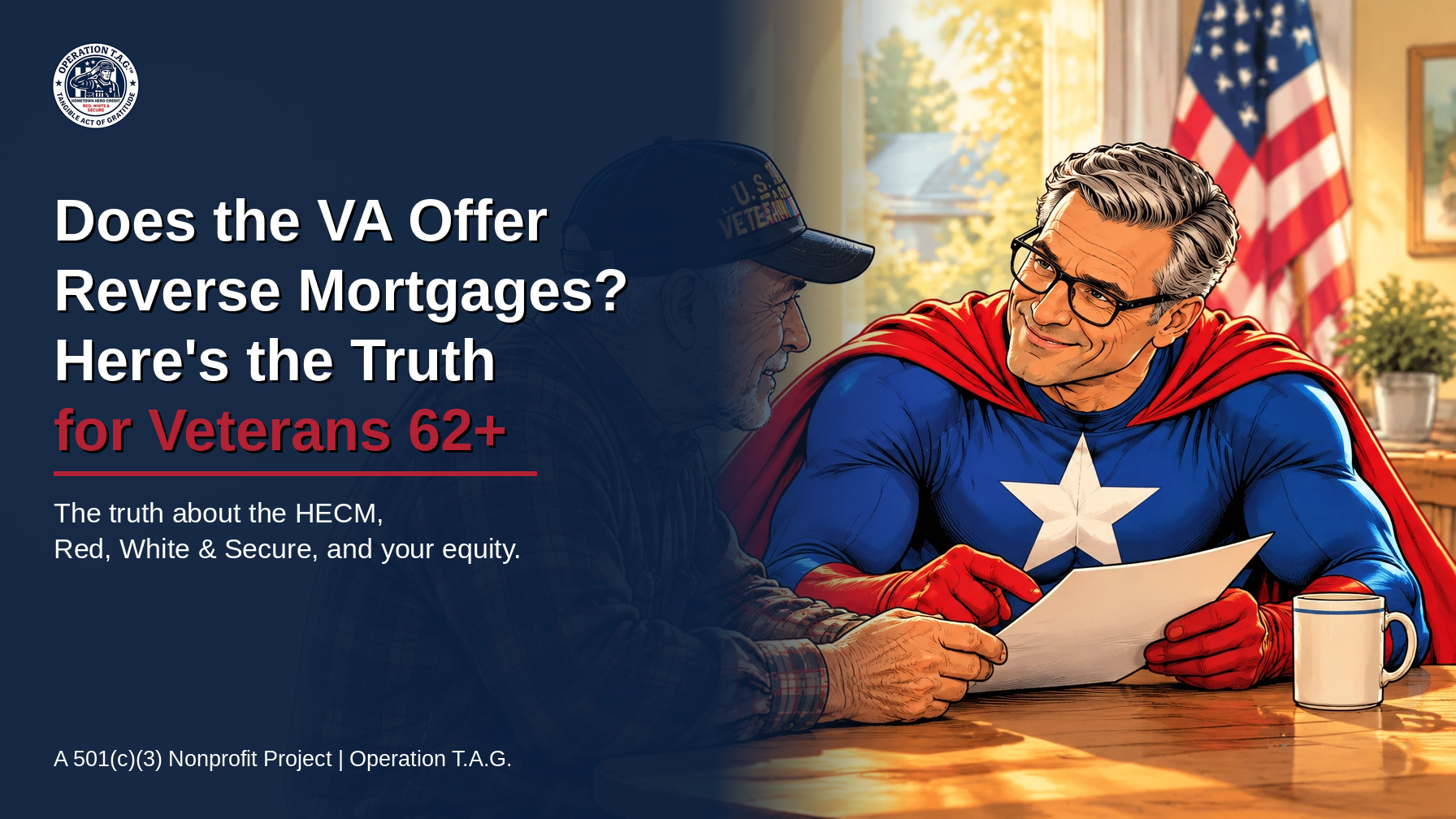
  • Does the VA Offer Reverse Mortgages? Here’s the Truth for Veterans 62+

    No. The Department of Veterans Affairs does not offer its own reverse mortgage. Veterans age 62 and older who are considering one typically explore an FHA-insured Home Equity Conversion Mortgage (HECM) through an FHA-approved lender. A HECM is a loan, not a VA benefit or a grant, and the same federal program rules apply to veterans and nonveterans.

    I’m Brett Stacy, an Army dad and a veteran of the mortgage industry. I’ve spent years around homeownership conversations, and I believe people deserve a plain answer before anyone discusses a product. Reverse mortgages can be complex. My purpose here is to help you ask better questions, understand the responsibilities, and consider your options without pressure.

    Gratitude isn't a certification. It's something you do. To me, that means helping veterans protect their choices and their home equity, not simply saying thank you.

    What reverse mortgage is available to veterans?

    The federal reverse mortgage program most commonly discussed is the FHA-insured HECM. The U.S. Department of Housing and Urban Development (HUD) explains that a HECM is available through an FHA-approved lender. Generally, the youngest borrower must be at least 62, and the home must meet program requirements.

    A HECM may let an eligible homeowner access part of their home equity without making monthly principal-and-interest payments. But no monthly mortgage payment does not mean no responsibilities:

    • You must continue to occupy the home as your principal residence.
    • You remain responsible for property taxes and homeowners insurance.
    • You must maintain the property.
    • Interest and fees are added to the loan balance over time.
    • The loan is eventually repaid under its terms, often when the borrower sells, moves out permanently, or dies.

    As the Consumer Financial Protection Bureau explains, a reverse mortgage is not free money. The balance can grow, reducing the equity remaining in the home. A HUD-approved counselor can help you review a HECM before you decide.

    An older veteran and a family member calmly review paperwork at home

    What is Red, White & Secure™?

    Red, White & Secure™ is Operation T.A.G.’s veteran-exclusive reverse mortgage initiative, developed in partnership with PRMG. It may provide eligible veterans with up to $6,000 in origination fee savings. This is a potential savings, not a guarantee. Eligibility, loan terms, fees, and savings are determined by PRMG and depend on the borrower’s circumstances and applicable requirements.

    The reverse mortgage itself remains a repayable loan. Any potential origination-fee savings do not turn it into a grant or erase the borrower’s ongoing responsibilities.

    Operation T.A.G. is a 501(c)(3) nonprofit, not a lender. PRMG handles applications, lending decisions, loan terms, and eligibility determinations. We help educate and connect families with licensed lending partners.

    How do the programs compare by potential dollar value?

    Averages are not published for these programs, so it would be misleading to claim an average amount a family receives. The list below ranks them by the stated maximum or quantified potential value instead. These figures are not guaranteed and are not directly comparable: one is a closing-cost credit, another is potential fee savings, and a HECM’s loan amount depends on individual circumstances.

    1. Hometown Hero Credit™, up to $21,000; non-repayable. Eligible military families may receive a credit equal to 2% of the loan amount toward eligible homeownership costs, subject to program and lending requirements. This is for eligible purchases or refinances, not reverse mortgages, and is not a cash payment. Learn about Hometown Hero Credit.
    2. Red, White & Secure™: potential savings of up to $6,000; reverse mortgage is repayable. Potential origination-fee savings are subject to eligibility and applicable terms. Ask PRMG for the current written details.
    3. Standard FHA-insured HECM: amount varies; repayable. The amount available depends on factors including borrower age, interest rates, and home value. There is no single dollar amount that applies to every veteran.

    For veterans buying a home, Hometown Hero Credit may be a related form of veteran home buying assistance. VA loan benefits, veteran down payment assistance, and military housing grants are separate topics with their own eligibility rules. A licensed professional can help you understand which options may apply to your purchase. CalVet and Hometown Hero Credit are separate programs that cannot be combined; discuss your options with a licensed professional.

    Why should veterans take time to check the details?

    Because clear information matters. In June 2024, the CFPB announced action concerning alleged reverse-mortgage servicing failures involving NOVAD and Sutherland. The resulting consumer redress process involves $11.5 million and is administered by Rust Consulting. The CFPB lists compensation as ongoing beginning January 30, 2026. If you believe you may be affected, use the official CFPB case page or call Rust Consulting at 1-800-731-9353.

    There is also a more recent legal development. On January 29, 2026, AARP Foundation announced a class action alleging that certain reverse-mortgage companies charged prohibited fees. The allegations are not a court finding. Read the AARP Foundation announcement for details.

    These cases are reminders to take your time, ask for an itemized explanation of costs, and seek qualified independent guidance. A trustworthy professional should welcome your questions and give you room to compare options.

    A simple, careful next step

    1. Learn the basics. Start with HUD’s HECM information and consider speaking with a HUD-approved counselor.
    2. Ask for written details. Request the loan’s fees, terms, borrower responsibilities, and how the balance may change over time.
    3. Compare alternatives. Talk with your family or a trusted adviser if you wish. You do not need to make a decision just because you asked questions.

    If you would like to learn about Red, White & Secure™, contact Operation T.A.G. or call 760-456-8748. We can help connect you with a licensed partner. Your home, your equity, and your peace of mind deserve careful consideration.

    FREE BOOK DOWNLOAD: Retirement Reset

    For veterans and older homeowners thinking about their home equity, Brett Stacy’s free workbook, Retirement Reset, is designed to help you better understand your equity and explore your retirement options — a natural companion to a conversation about reverse mortgages. Download it at HometownHeroCredit.com — just click Books & Resources at the top of the page.

    Free Retirement Reset workbook download QR card — scan to get your copy

    Operation T.A.G. official logo

    Standing up for those who stood up for us.

    Frequently asked questions

    Does the VA offer reverse mortgages?

    No. The VA does not offer its own reverse mortgage. Eligible homeowners may consider an FHA-insured HECM through an FHA-approved lender.

    Can I use my VA disability status to waive HECM fees?

    A service-connected disability may qualify a borrower for a VA funding-fee exemption on certain VA-guaranteed loan types. That is separate from an FHA-insured reverse mortgage and does not automatically waive HECM fees. Ask a licensed professional about your specific situation.

    Does a reverse mortgage have to be repaid?

    Yes. A HECM is a loan. Although monthly principal-and-interest payments generally are not required while the borrower meets the loan obligations, the balance is repaid under the loan’s terms. Property taxes, insurance, and maintenance remain the homeowner’s responsibility.

    Is Red, White & Secure™ a grant?

    No. It is a reverse mortgage initiative developed with PRMG. Eligible veterans may receive up to $6,000 in origination-fee savings, subject to applicable terms, but the reverse mortgage remains repayable.

    Is Operation T.A.G. the lender?

    No. Operation T.A.G. is not a lender. PRMG handles applications, lending decisions, loan terms, and eligibility determinations.


    Brett Stacy
    Founder & National Director, Operation T.A.G.™
    National Brand Ambassador, Hometown Hero Credit™
    Military Family Advocate | Author | Speaker
    OperationTAG.org | HometownHeroCredit.com

  • 3.1 Million VA Disability Claims Processed. But Every Veteran Is More Than a Number.

    By Operation T.A.G. A Tangible Act of Gratitude

    There’s some encouraging news coming out of the Department of Veterans Affairs. And while the numbers are impressive, I think there’s a much more important story behind them.

    On October 15, the VA announced it processed 3,111,399 disability compensation claims during fiscal year 2026, surpassing the previous year’s record of approximately 3 million claims. The agency also reported that its claims backlog had decreased by more than 70% from its January 2025 level, average processing times had fallen substantially, and claims-processing accuracy had reached approximately 94%. The highest rate in two years, according to the VA.

    Those are meaningful improvements, if the reported progress is sustained. You can read the VA’s announcement for details.

    But here’s what I want us to remember.

    Behind every one of those 3.1 million claims is a human being.

    A veteran who served our country.

    A husband or wife. A father or mother. A son or daughter.

    Someone whose life may have been permanently changed by their military service.

    And to that person, their claim isn’t simply a case number in a government computer.

    It’s personal.

    What a Disability Claim Really Represents

    I wonder how many Americans understand what it means for a veteran to file a disability claim.

    For some, it’s a relatively straightforward process.

    For others, it means revisiting experiences they’d rather forget. Gathering medical records. Explaining injuries. Attending examinations. Waiting for decisions that could affect their financial stability, healthcare, and family.

    Imagine being the veteran who checks their claim status every morning, hoping today might be the day.

    Or the spouse watching someone they love struggle with an injury or condition that has affected their daily life for years.

    Now imagine receiving a decision that finally acknowledges the connection between that condition and military service.

    That’s why faster processing matters.

    But speed alone isn’t enough. Veterans deserve decisions that are timely, accurate, understandable, and fair.

    An older veteran reading a letter at home while a family member listens nearby

    Progress Deserves Recognition. So Does the Work Still Ahead.

    I believe in recognizing progress when we see it.

    When a government agency finds ways to serve veterans more efficiently, that’s good news, regardless of who occupies the White House.

    This shouldn’t be a Republican issue or a Democratic issue. It’s an American responsibility.

    At the same time, record processing numbers don’t mean every veteran has received the right decision or that every family has found the help it needs.

    A veteran waiting on a complicated claim may not feel encouraged by national statistics.

    Someone who receives a denial they believe is incorrect may still face a long, confusing process.

    And a 94% accuracy rate, while encouraging, reminds us that mistakes remain possible.

    We can celebrate improvements without pretending the work is finished.

    In fact, that’s exactly what we should do.

    A Message From Captain Gratitude

    Our official Operation T.A.G. spokesperson, Captain Gratitude, has a message for every veteran navigating the benefits system:

    “You are not a claim number. You are not a statistic. You are someone who answered your country’s call. And you deserve to be treated that way.”

    I love that message because it gets to the heart of what gratitude should mean.

    It’s not enough to thank someone for their service and then leave them to navigate a complicated system alone.

    Sometimes gratitude means sitting beside a veteran while they complete an application.

    Sometimes it means helping them find an accredited Veterans Service Organization representative.

    Sometimes it means encouraging someone not to give up after an unexpected denial.

    And sometimes it means simply listening.

    Gratitude isn’t a certification. It’s something you do. Standing up for those who stood up for us means helping people find reliable information and treating each veteran as a person, not a statistic.

    If You’re Waiting on a VA Disability Claim

    If you or someone you love has filed a claim, there are several important resources worth knowing about.

    You can check the status of a pending claim directly through VA.gov.

    If you need assistance preparing or reviewing a claim, the VA provides information about accredited representatives. Many Veterans Service Organization representatives provide assistance free of charge. Accredited attorneys and claims agents may charge fees, so ask about costs before working with a representative.

    If you’ve received a decision you disagree with, the VA provides several decision review and appeal options, each with its own requirements and deadlines. Review the official information promptly so you can understand which options may apply to your situation.

    You don’t have to understand the entire system before asking for assistance.

    The Number That Matters Most

    Three million, one hundred eleven thousand, three hundred ninety-nine.

    That’s how many disability compensation claims the VA says it processed in fiscal year 2026.

    An extraordinary number.

    But I hope we never become so impressed by statistics that we forget the individuals behind them.

    Because to a veteran and their family, the most important claim isn’t one of 3.1 million. It’s theirs.

    When Scott and I established Operation T.A.G., we believed our country’s gratitude should be demonstrated through meaningful action. That conviction hasn’t changed.

    We celebrate every improvement that helps veterans receive the benefits they’ve earned.

    And we’ll continue encouraging people to help veterans find reliable information, credible assistance, and the support they deserve.

    Because “Thank you for your service” should never be the end of the conversation.

    It should be the beginning of our commitment.

    Gratitude Over Profits. Always.

    Operation T.A.G. A Tangible Act of Gratitude
    Helping. Informing. Supporting. Protecting.
    https://HometownHeroCredit.com

    Frequently Asked Questions

    How many disability claims did the VA process in fiscal year 2026?

    A record 3,111,399 claims, announced October 15, 2026-surpassing the previous year’s approximately 3 million.

    How much did the VA backlog improve?

    The VA reported a backlog decrease of more than 70% from January 2025 levels, along with faster average processing times and approximately 94% claims-processing accuracy.

    How do I check the status of my VA disability claim?

    Use the VA’s claim status tool.

    Who can help me prepare or review a claim?

    A VA-accredited representative can help. Many Veterans Service Organization representatives assist free of charge. Find one through the VA’s representative search page.

    What if I disagree with a VA decision?

    The VA offers several review and appeal options, each with specific deadlines and requirements. Learn about them at VA decision reviews and appeals.

    What is Operation T.A.G.?

    Operation T.A.G. is a 501(c)(3) nonprofit military homeownership support organization, not a lender, founded by Brett Stacy and his son Scott. Its mission is to help, inform, support, and protect military families.

    FREE BOOK DOWNLOAD: Retirement Reset

    Free book download card for Retirement Reset by Brett Stacy, with QR code

    Visit HometownHeroCredit.com to learn more.

    Operation T.A.G. official logo

    Brett Stacy
    Founder & National Director, Operation T.A.G.™
    National Brand Ambassador, Hometown Hero Credit™
    Military Family Advocate | Author | Speaker
    OperationTAG.org | HometownHeroCredit.com

    Operation T.A.G. is a 501(c)(3) nonprofit organization, not a lender. All mortgage applications, loan terms, rates, and lending services are provided by appropriately licensed lending partners. PRMG NMLS #75243.

  • When a Veteran Needs Help, Finding It Shouldn’t Be the Hardest Part

    Captain Gratitude has a message for America’s veterans: You don’t have to figure everything out alone.

    Imagine serving your country for years, returning home, and discovering that getting the assistance you need feels like navigating an obstacle course.

    One phone number leads to another. One website sends you somewhere else. You complete an application, only to discover there’s another form, another department, or another requirement you didn’t know existed.

    And somewhere along the way, you begin to wonder whether asking for help is worth the frustration.

    I find that heartbreaking.

    Our veterans have already done the hard part. They’ve served, sacrificed, missed time with their families, and accepted responsibilities most Americans will never experience.

    Why should finding assistance become another battle?

    The Help Exists. But Can Veterans Find It?

    There are thousands of organizations, programs, and resources dedicated to helping veterans and military families.

    Some provide healthcare assistance. Others help with employment, education, housing, financial challenges, rehabilitation, or transitioning into civilian life.

    But here’s the problem.

    Knowing that help exists and knowing where to find it are two very different things.

    That’s why I was encouraged to learn more about the National Resource Directory, a federal website connecting service members, veterans, their families, and caregivers with thousands of vetted services and programs at the national, state, and local levels.

    The directory is operated through a partnership among the U.S. Departments of Defense, Labor, and Veterans Affairs. Its resources cover areas including employment, education, housing, health, benefits, and community support.

    It’s not a solution to every problem, but it’s a useful place to begin.

    Explore the National Resource Directory

    Captain Gratitude Has Something to Say

    If you’ve followed Operation T.A.G., you probably know Captain Gratitude.

    He’s our superhero with a rather unusual superpower.

    He doesn’t fly faster than a speeding bullet. He doesn’t leap over tall buildings.

    His mission is much simpler.

    He stands up for those who stood up for us.

    And if Captain Gratitude could sit down with a veteran who’s struggling to find assistance, I imagine he’d say something like this:

    “You spent years looking out for other people. You stood beside your fellow service members when they needed you. Now it’s our turn to stand beside you. You don’t have to figure everything out alone. And you certainly don’t have to apologize for asking for help.”

    That’s the heart behind Captain Gratitude.

    And it’s the heart behind Operation T.A.G.

    Sometimes the Most Important Thing We Can Do Is Listen

    Not every veteran needs assistance.

    Not every veteran is struggling.

    Many are enjoying wonderful lives, successful careers, fulfilling retirements, and time with their families.

    But when someone does need help, they shouldn’t have to feel embarrassed about asking.

    Sometimes they simply need someone willing to listen, understand their circumstances, and help them identify the next step.

    Perhaps it’s a veteran trying to understand a healthcare benefit.

    Maybe it’s a military spouse looking for employment resources.

    Or perhaps it’s an older veteran who needs assistance remaining safely in their home.

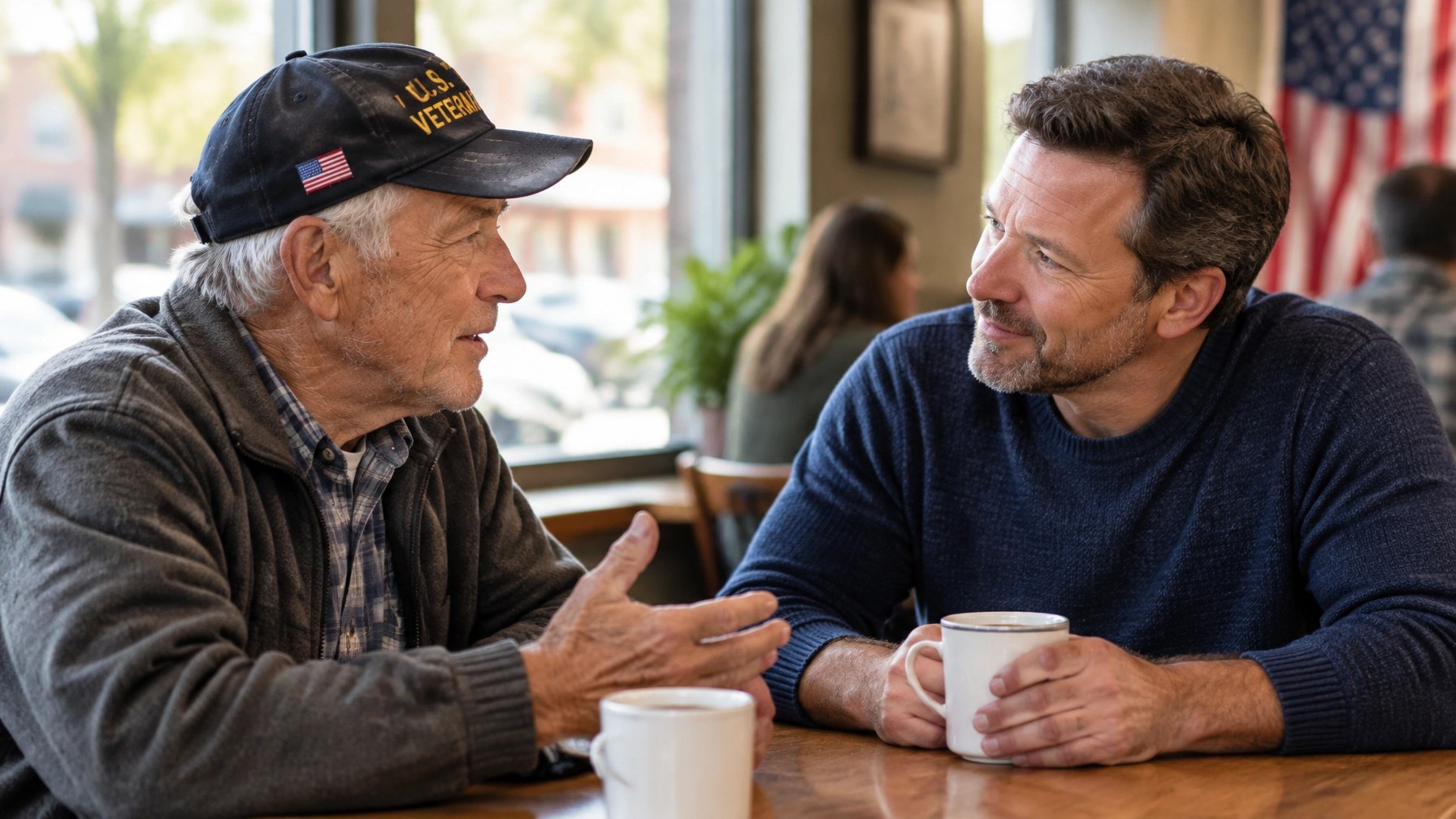
    An older veteran and a friend share a thoughtful conversation over coffee in a welcoming community setting.

    The circumstances may be different, but the principle remains the same.

    Nobody should have to navigate a difficult season of life without knowing where to turn.

    Gratitude Should Lead Somewhere

    When Scott and I established Operation T.A.G., we wanted to create something more meaningful than another organization that simply thanked veterans for their service.

    We wanted to turn gratitude into action.

    That’s why our name stands for A Tangible Act of Gratitude.

    We believe helping veterans understand their options, connecting families with credible resources, and protecting them from misinformation are meaningful ways to demonstrate appreciation.

    Through our Hometown Hero Credit™ initiative, we also work to help eligible military families understand their homeownership opportunities and connect with authorized mortgage professionals.

    But our mission has never been simply about mortgages.

    It’s about people.

    It’s about recognizing that behind every uniform is a person with hopes, responsibilities, challenges, and dreams.

    And it’s about being willing to help even when there’s nothing to sell.

    Gratitude isn’t a certification. It’s something you do.

    Let’s Make Finding Help a Little Easier

    Today, I’d like to ask you to do something simple.

    If you know a veteran or military family who could benefit from additional support, share the National Resource Directory with them.

    Take a moment to ask how they’re doing.

    Offer to help them find a resource.

    And if they don’t need anything, that’s wonderful, too.

    Sometimes simply knowing someone cares is meaningful in itself.

    Captain Gratitude reminds us that you don’t need superpowers to make a difference.

    Sometimes you just need a willing heart and a little time.

    Our veterans have already done the hard part. They served. They sacrificed.

    Finding someone willing to help shouldn’t require another battle.

    And that’s why we’ll keep standing up for those who stood up for us.

    Gratitude Over Profits. Always.

    Standing up for those who stood up for us.

    Frequently Asked Questions

    What is the National Resource Directory?

    A federal website at nrd.gov that connects service members, veterans, families, and caregivers with vetted services and programs at national, state, and local levels. It is operated through a partnership among the Departments of Defense, Labor, and Veterans Affairs.

    What kinds of resources does it include?

    Employment, education, housing, health, benefits, and community support resources.

    Who is Captain Gratitude?

    Operation T.A.G.’s superhero spokesperson, whose superpower is simple: he stands up for those who stood up for us.

    How can I help a veteran who may need support?

    Share nrd.gov, ask how they’re doing, and offer to help them find a resource. Sometimes knowing someone cares is meaningful in itself.

    What is the Hometown Hero Credit?

    It’s a non-repayable credit of 2% of the loan amount, up to $21,000, toward eligible closing costs for eligible military families through lending partner PRMG. Program guidelines and eligibility apply. Operation T.A.G. is not a lender.

    How do I reach Operation T.A.G.?

    Visit HometownHeroCredit.com or OperationTAG.org, or call 760-456-8748.

    FREE BOOK DOWNLOAD: Retirement Reset

    Free Book Download: Retirement Reset by Brett Stacy. Scan the QR code to get your copy.


    Operation T.A.G. A Tangible Act of Gratitude
    Helping. Informing. Supporting. Protecting.
    National Resource Directory: https://nrd.gov
    Military homeownership education and free resources: https://HometownHeroCredit.com
    Operation T.A.G. is an independent nonprofit organization, not a mortgage lender. Mortgage services are provided by authorized lending partners.

    Operation T.A.G. is a 501(c)(3) nonprofit organization, not a lender. All mortgage applications, loan terms, rates, and lending services are provided by appropriately licensed lending partners. PRMG NMLS #75243.
    Operation T.A.G. official logo

    Brett Stacy
    Founder & National Director, Operation T.A.G.™
    National Brand Ambassador, Hometown Hero Credit™
    Military Family Advocate | Author | Speaker
    OperationTAG.org | HometownHeroCredit.com

  • Legacy Letters: Play Your Heart Out. Leave the Scoreboard to God.

    Sunday Legacy Letters — Turning gratitude into action, one story at a time.

    Sometimes the greatest victory isn’t winning. It’s learning to trust God with the outcome.

    If you grew up in Southern California’s Inland Empire during the 1970s and 1980s, and you happened to love tennis, you were living in something of a golden age. Tennis was everywhere! Public courts were packed, tournaments were enormous, and on any given weekend, you could find some incredibly talented players battling it out under the Southern California sun.

    And when I say enormous tournaments, I’m not exaggerating. It wasn’t unusual for a tournament to attract more than 800 entries! The B and C divisions were so popular that organizers had to split them into three separate levels just to accommodate everyone. B+, B, B-. You get the picture. Everybody wanted to play, and there was certainly no shortage of competition.

    But the granddaddy of them all was the San Bernardino Open.

    That tournament was something special. Players traveled from across the country to compete, and for those of us who took our tennis seriously, it was one of the highlights of the year. I would begin preparing months in advance, practicing, conditioning, working on my game, and imagining what it would feel like to compete against some of the best players in the draw.

    A classic wooden tennis racket and ball on a weathered bench beside an empty court in warm Inland Empire light

    I loved tennis. I loved the sound of a perfectly struck ball, the feeling of moving across the court, the strategy of figuring out an opponent, and especially the competition. I still do! There’s something about stepping onto a tennis court, looking across the net, and knowing that for the next couple of hours, you’re going to find out exactly what you’re made of.

    Interestingly enough, I was usually a better match player than a practice player. Practice was fine, but put a scoreboard out there, give me an opponent who wanted to beat me, and suddenly everything became a little more interesting. LOL!

    One year, when the San Bernardino Open draw was published, I discovered that my first-round opponent was the tournament’s number three seed.

    Number three!

    Now, some players might have looked at that draw and wondered what terrible thing they’d done to deserve such an unfortunate opening match. Not me. I was excited! Here was an opportunity to test myself against one of the tournament favorites. What more could a competitor ask for?

    On the morning of the match, I met my doubles partner (David Salmon) for a warm-up. We hit for a while, working through our usual routine, when he mentioned that he knew my opponent.

    He proceeded to tell me just how good this guy was and how difficult the match was going to be.

    Well, thank you very much for that encouraging scouting report! LOL!

    But I remember telling him something that, looking back, has become one of the most important lessons of my life.

    I told him that I wasn’t particularly worried about winning or losing. Of course I wanted to win! I was a competitor, after all. But winning wasn’t the only thing that mattered to me.

    What mattered was that I showed up prepared, competed with everything I had, and refused to quit.

    I could control my effort. I could control my attitude. I could control how hard I fought for every point.

    But I couldn’t control the outcome. That part belonged to God.

    When the match began, I quickly discovered that my doubles partner hadn’t been exaggerating. My opponent was every bit as good as advertised. We battled through long rallies, momentum changes, and those exhausting points where your lungs are begging for mercy, but your competitive spirit keeps telling your legs to move.

    Neither of us was willing to give an inch.

    The match went three grueling sets. I don’t remember every game, every point, or even the final score anymore. Isn’t that interesting? At the time, every point seemed so important. Decades later, most of those details have faded.

    But I remember the battle.

    And I remember winning.

    After the final point, we walked to the net, shook hands, and acknowledged what had been an incredible match. Then, quietly, I thanked God.

    I thanked Him for the opportunity to compete. I thanked Him for the strength to keep fighting when I was tired. And yes, I thanked Him for the victory.

    But here’s something I want you to understand.

    I would have thanked Him even if I had lost.

    Because the lesson wasn’t about God helping me beat the number three seed. I don’t believe God loved me more than the fellow standing across the net. And I certainly don’t believe He was sitting in heaven keeping track of my unforced errors!

    The lesson was about trusting Him enough to give my very best without demanding that He deliver the outcome I wanted.

    “The Lord Will Do What Is Good in His Sight”

    Years later, I came across a passage of Scripture that reminded me of that morning on the tennis court.

    1 Chronicles 19:13:

    “Be strong, and let us fight bravely for our people and the cities of our God. The Lord will do what is good in his sight.”

    Think about that for a moment.

    Joab, the commander of Israel’s army, was preparing his men for battle against a formidable enemy. This wasn’t a tennis match. There were no trophies, no handshakes at the net, and certainly no opportunity to come back next weekend and try again.

    Lives were at stake.

    And yet, listen to what Joab told his men.

    Be strong. Fight bravely. Do what you’ve been called to do.

    And then trust God to do what is right.

    Joab didn’t promise his soldiers they would win. He didn’t guarantee that everything would turn out the way they hoped. He didn’t even know whether they would survive the battle.

    What he knew was that they had a responsibility to show up, stand together, and fight courageously.

    The outcome belonged to God.

    I’ve thought about that passage many times over the years, especially during seasons when life felt a whole lot more difficult than a three-set tennis match.

    Because here’s what I’ve discovered after more than six decades of living.

    Life doesn’t always reward our best efforts with the results we want.

    Sometimes you work harder than you’ve ever worked, and the business still struggles. Sometimes you pour your heart into a relationship, and it still falls apart. Sometimes you pray with everything inside you, and the answer isn’t the one you were hoping to hear.

    Sometimes you do everything right, and life still knocks you flat on your backside.

    And believe me, I’ve spent enough time on my backside to know what I’m talking about! LOL!

    But faith was never supposed to be a guarantee that we’d win every battle.

    Faith is the confidence that even when we don’t know how the battle will end, we know Who is standing beside us.

    That’s the part I love most.

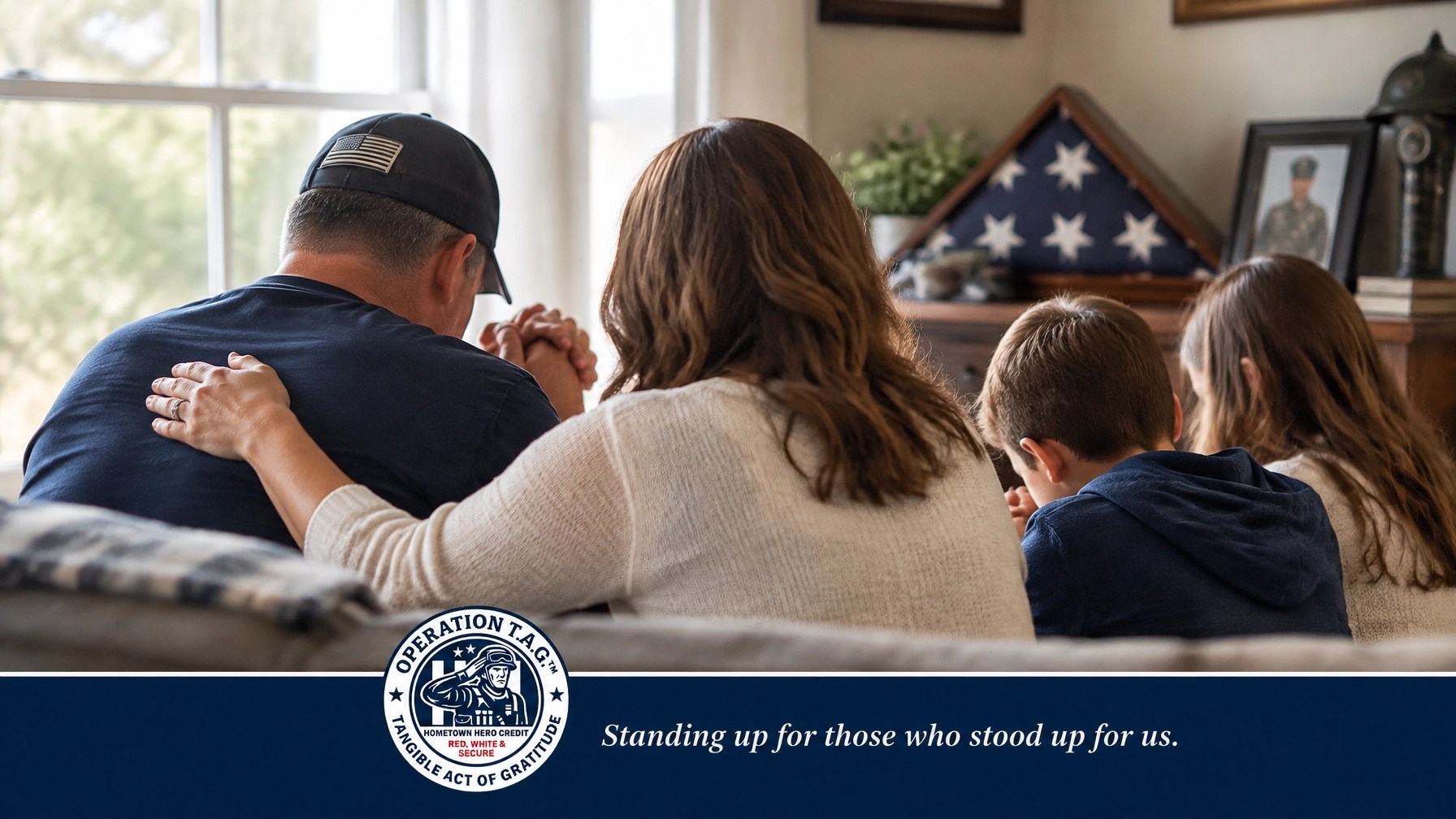
    A veteran family seen from behind in a quiet moment of prayer and support at home

    In Psalm 91:14–15, God speaks of His love, protection, and deliverance. But tucked into those promises is something especially meaningful:

    “I will be with him in trouble.”

    Notice what God doesn’t say.

    He doesn’t promise we’ll never experience trouble. He doesn’t promise every prayer will be answered exactly as we want. He doesn’t promise that following Him means we’ll never lose, suffer, struggle, or find ourselves facing something that seems impossible.

    He promises something better.

    He promises His presence.

    And my friends, there have been moments in my life when that promise was the only thing I had left to hold on to.

    Looking back at that young tennis player preparing to face the number three seed, I realize I was learning a lesson that would serve me long after I put away my competitive tennis shoes.

    I was learning that courage isn’t knowing you’re going to win.

    It’s being willing to step onto the court when you don’t know the outcome.

    I was learning that faith isn’t asking God to make everything easy.

    It’s trusting Him enough to keep going when everything is hard.

    And perhaps most importantly, I was learning that my responsibility was never to control the scoreboard.

    My responsibility was to play the very best match I could.

    So, whatever you’re facing today, whether it’s a challenge at work, a difficult diagnosis, a struggling relationship, an uncertain future, or simply one of those seasons when life seems determined to test every ounce of strength you have, I want to encourage you.

    Show up. Be strong. Fight bravely. Give it everything you’ve got.

    Don’t let the fear of losing keep you from stepping onto the court.

    Don’t allow the size of the challenge to convince you that you don’t belong in the match.

    And don’t measure God’s faithfulness by whether the scoreboard happens to favor you today.

    Do your part. Trust Him with His.

    Because when the match is over, the thing that will matter most isn’t whether you won every point.

    It’s whether you played with courage, lived with faith, and trusted the One who promised never to leave your side.

    Today, play your heart out. Leave the scoreboard to God.

    And remember, my friend…

    You are never, ever alone.

    Until next Sunday,

    Frequently Asked Questions

    What is a Sunday Legacy Letter?

    A Sunday Legacy Letter is a weekly series by Brett Stacy featuring personal stories and faith-based reflections, turning gratitude into action, one story at a time.

    What is the verse in this story?

    1 Chronicles 19:13: “Be strong, and let us fight bravely for our people and the cities of our God. The Lord will do what is good in his sight.” These are Joab’s words before battle, expressing trust in God with the outcome.

    Who was Joab facing in the story?

    Joab, commander of Israel’s army, faced a formidable enemy with thirty-two thousand chariots, yet trusted that God would do what was right.

    What does Psalm 91:14–15 promise?

    Among promises of love, protection, and deliverance, God says, “I will be with him in trouble” — the promise of His presence.

    How can I read more Legacy Letters?

    Visit HometownHeroCredit.blog for Brett’s latest Sunday Legacy Letters.

    FREE BOOK DOWNLOAD: Retirement Reset

    For Legacy Letter readers planning their next chapter, Retirement Reset is a free workbook about home equity and housing choices in retirement. It may be a helpful resource for veterans and older homeowners considering their options.

    FREE BOOK DOWNLOAD: Retirement Reset by Brett Stacy. Scan to get your free copy.

    Operation T.A.G. logo

    Brett Stacy
    Founder & National Director, Operation T.A.G.™
    National Brand Ambassador, Hometown Hero Credit™
    Military Family Advocate | Author | Speaker
    OperationTAG.org | HometownHeroCredit.com

    Operation T.A.G. is a 501(c)(3) nonprofit organization, not a lender. All mortgage applications, loan terms, rates, and lending services are provided by appropriately licensed lending partners. PRMG NMLS #75243.

  • Our Veterans Served. They Sacrificed. And Somehow, We Turned Them Into a Target Market.

    By Brett Stacy | Founder & National Director, Operation T.A.G.

    I need to get something off my chest.

    Before I go any further, let me say this: I believe in business. I believe in entrepreneurship. I believe people should be compensated fairly for the work they do and the services they provide.

    I’ve spent much of my professional life in the mortgage industry. I understand marketing, building relationships, generating leads, and making a profit.

    But somewhere along the way, I think we’ve crossed a line.

    We’ve turned America’s veterans into a target market.

    Men and women raised their right hands, swore an oath, left their families, missed birthdays and anniversaries, endured deployments, and in some cases came home carrying wounds the rest of us will never fully understand.

    And what do some of us see when we look at them?

    A potential customer.
    A lead.
    A commission.
    An opportunity to make money.

    I don’t know about you, but that bothers me. Deeply.

    When Did Gratitude Become a Marketing Strategy?

    We’ve become very good at saying, “Thank you for your service.”

    We put those words on billboards and brochures. We use patriotic colors, military imagery, and emotional language to attract veterans to our businesses.

    We talk about honoring heroes. Giving back. Serving those who served.

    Sometimes, those words are absolutely sincere. There are wonderful businesses and professionals across this country who genuinely care about military families. I’ve had the privilege of working alongside many of them.

    But there are also people who have figured out that patriotism sells.

    They know that phrases like “exclusive veteran benefit,” “military appreciation,” and “special offer for heroes” can build trust before a single question is asked.

    And sometimes, that trust is exactly what they’re selling.

    Here’s the question I wish more businesses would ask themselves:

    If there were no profit to be made, would we still be trying to help these veterans?

    That’s a difficult question.

    It should be.

    The Numbers Should Trouble Every American

    This isn’t simply a matter of opinion.

    According to the Federal Trade Commission’s Consumer Sentinel Network Data Book for 2024, military-connected consumers reported approximately $584 million in fraud losses that year. Veterans and military retirees accounted for approximately $419 million of those reported losses.

    Let that sink in.

    And those are reported losses, not a complete count of everyone harmed. The FTC says its data are based on consumer reports, which are unverified and are not a survey of all consumers. A report is not, by itself, proof that a particular business did something wrong.

    The Consumer Financial Protection Bureau’s Office of Servicemember Affairs has also reported hundreds of thousands of complaints from servicemembers, veterans, and military families over the years. Those complaints involve financial products and services such as mortgages, credit reporting, debt collection, and banking.

    To be fair, a complaint does not automatically mean wrongdoing. And not every financial loss represents deliberate exploitation.

    But these figures should tell us something important:

    Military families face real financial risks, and their trust deserves protection.

    We shouldn’t have to wait until a veteran loses money before we start asking whether we’re treating them fairly.

    Exploitation Doesn’t Always Look Like a Scam

    When we hear about veterans being taken advantage of, we may picture obvious scams: someone pretending to represent the VA, stealing benefits, or promising a financial miracle in exchange for an upfront payment.

    Those things happen, and they’re reprehensible.

    But I’m concerned about something more subtle.

    What about a legal financial product that isn’t the best option for the veteran? An unnecessary fee buried in the paperwork? An attractive advertised rate that makes the true cost difficult to understand?

    What about a salesperson who knows there may be a better alternative but doesn’t mention it because that alternative pays less?

    And what about a business that builds its entire marketing campaign around honoring veterans but does very little to improve their lives?

    Those questions deserve answers.

    Because something can be legal without being right.

    When we’re dealing with people who have sacrificed so much for our country, shouldn’t our standard be higher than doing only what’s legally permissible?

    I’m Going to Challenge My Own Industry

    Mortgage lending can do tremendous good. The VA home loan benefit is one of the most valuable benefits our country provides to eligible veterans and service members.

    I’ve seen what homeownership can mean to a young military family. I’ve seen the pride, the relief, and the tears that sometimes come with receiving those keys.

    But I’ve also seen how easily the conversation can shift from serving the borrower to closing the transaction.

    Veterans receive advertisements promising special rates, reduced payments, and exclusive opportunities. Some offers are legitimate. Others deserve a much closer look.

    The Department of Veterans Affairs has warned about misleading mortgage advertising, including ads that create the impression of official government affiliation or fail to clearly explain important loan terms.

    A veteran shouldn’t need a financial expert sitting beside them just to figure out whether someone is being honest.

    If a refinance doesn’t make financial sense, say so. If the closing costs outweigh the benefits, explain that. If a veteran would be better off staying in their current mortgage, tell them.

    And if that means you don’t close a loan?

    Then don’t close the loan.

    The right decision for a military family is more important than anyone’s commission check. Every single time.

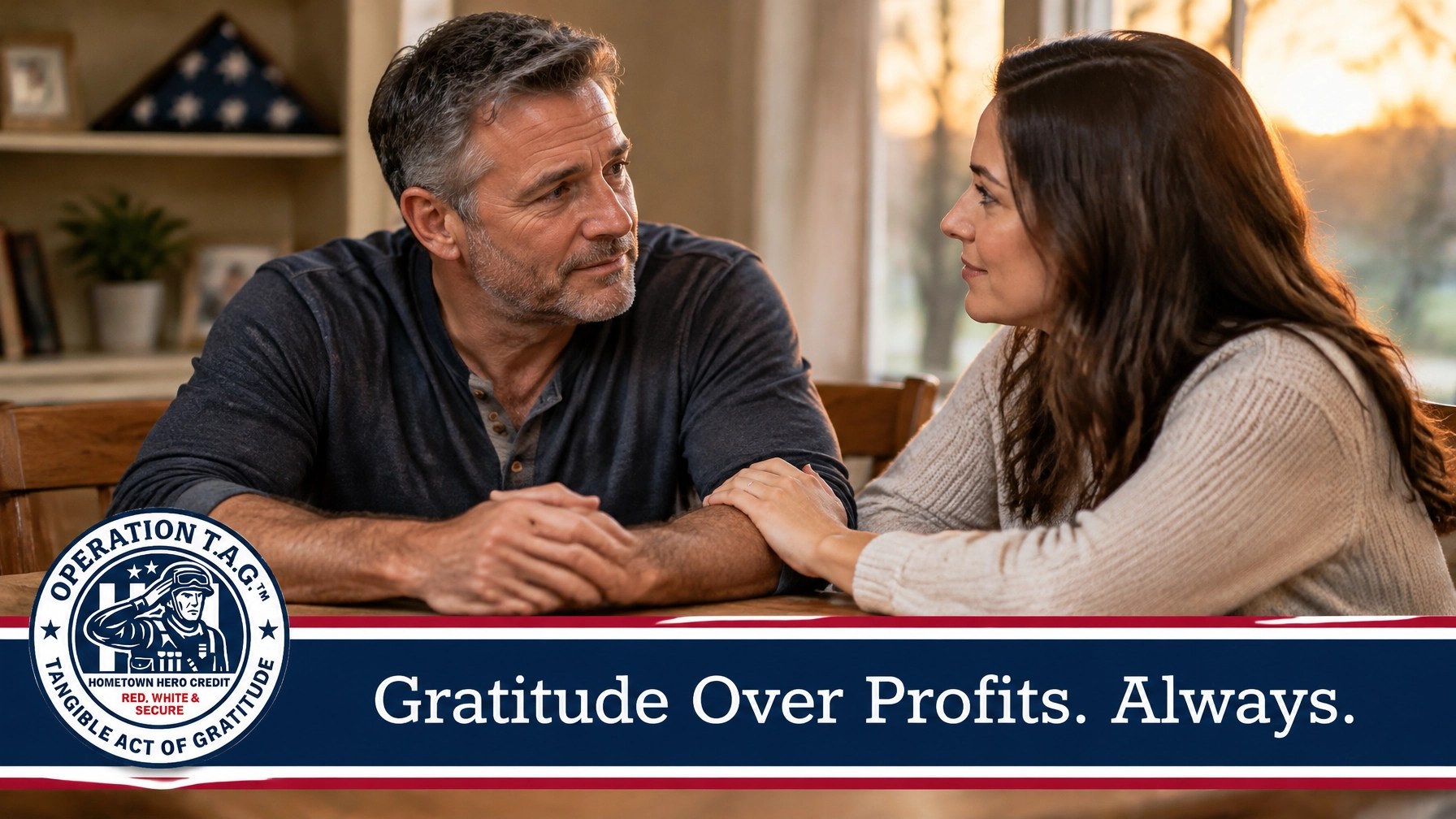
    A veteran father and his daughter share a thoughtful conversation at home in warm evening light, with an Operation T.A.G. logo and “Gratitude Over Profits. Always.”

    Why Scott and I Started Operation T.A.G.

    When my son Scott and I began building Operation T.A.G., we weren’t trying to create another marketing organization.

    We wanted to create something that reflected what we believed.

    Operation T.A.G. stands for A Tangible Act of Gratitude.

    Not a slogan.
    Not a clever advertising campaign.
    Not another way to attract customers.

    A tangible act. Something real. Something that makes a measurable difference in someone’s life.

    Through our Hometown Hero Credit initiative and the generosity of participating lending professionals, we’ve helped return more than $1.7 million in assistance to eligible military families.

    I’m proud of that accomplishment. But I’m even more proud of the philosophy behind it:

    • Businesses that benefit from serving military families should look for meaningful ways to give back.
    • Education should be accessible.
    • People deserve honest answers, even when those answers don’t lead to a transaction.
    • Gratitude is demonstrated by what we do when nobody is watching.

    Gratitude Over Profits. Always.

    That doesn’t mean businesses shouldn’t make money. It means profit should never become more important than the people we’re serving.

    There’s a difference.

    A very big difference.

    Gratitude isn’t a certification. It’s something you do. For us, that means standing up for those who stood up for us, with action, honesty, and respect.

    What If We Changed the Way We Look at Veterans?

    Imagine if every business marketing to veterans asked a few simple questions:

    1. Are we providing something of genuine value?
    2. Are we being completely transparent about the cost?
    3. Would we recommend this product or service to someone we love?
    4. Are we educating this veteran, or simply trying to persuade them?
    5. Are we doing something to earn the trust their service inspires?

    Imagine mortgage companies, insurance agencies, financial advisers, car dealerships, home-improvement businesses, and every other organization serving veterans embracing that standard.

    Imagine what might happen if we stopped asking how much revenue the military community could generate and started asking how much good we could accomplish.

    We would see veterans treated as people rather than prospects. And we would see gratitude become something more meaningful than a phrase printed beneath an American flag.

    We Can Do Better

    I’m an Army dad. I’ve watched my own family experience the realities of military service.

    I’ve spent enough time around veterans and military families to know that the sacrifices don’t always end when the uniform comes off. Sometimes they follow people into civilian life: into their finances, their health, their marriages and families, and the quiet moments when nobody else is looking.

    The last thing these men and women need is someone viewing those sacrifices as a business opportunity.

    They deserve professionals who tell them the truth. Businesses that protect their interests. People who will stand beside them even when there’s nothing to sell.

    They deserve a country where “Thank you for your service” means more than a marketing message.

    I’m not asking businesses to stop serving veterans. I’m asking them to remember why they should serve veterans.

    Because these men and women have already given us something extraordinarily valuable. Surely we can give them something better than another sales pitch.

    Our veterans served. They sacrificed. The least we can do is put their well-being ahead of our bottom line.

    We can do better. And we should.

    FREE BOOK DOWNLOAD: Retirement Reset

    Retirement Reset free book download QR card

    Explore the free Retirement Reset download, a practical workbook for considering home equity, financial stability, and housing choices in retirement. You can also visit HometownHeroCredit.com — just click Books & Resources at the top of the page.

    About Operation T.A.G.

    Operation T.A.G. (A Tangible Act of Gratitude) is an independent nonprofit organization dedicated to helping, informing, supporting, and protecting America's military families. Through educational resources, community outreach, and initiatives such as Hometown Hero Credit, our mission is to turn gratitude into meaningful action. Visit https://HometownHeroCredit.com for free military homeownership resources, educational materials, and information about available assistance programs. Operation T.A.G. is not a mortgage lender. Mortgage applications, loan terms, and eligibility determinations are handled by authorized lending partners.

    Frequently Asked Questions

    Is this article against businesses serving veterans?

    No. It’s a call for a higher standard: genuine value, transparency, and honest answers, even when the honest answer costs a sale.

    What is the Hometown Hero Credit?

    It is a credit of 2% of the loan amount, up to $21,000, toward eligible closing costs for eligible military families through lending partner PRMG. It is not repayable. Program guidelines and eligibility apply. Operation T.A.G. is not a lender.

    How much assistance has Operation T.A.G. returned to military families?

    More than $1.7 million through the Hometown Hero Credit initiative and participating lending professionals.

    What should veterans watch out for?

    Watch for misleading ads suggesting official VA affiliation, terms that aren’t clearly explained, pressure to act quickly, and “exclusive” offers that don’t hold up to questions. When in doubt, ask more questions, and take time to compare.

    How can I learn more or get connected with a vetted professional?

    Visit HometownHeroCredit.com or OperationTAG.org, or call 760-456-8748. Please don’t send sensitive financial information through an online message.

    Operation T.A.G. logo

    Brett Stacy
    Founder & National Director, Operation T.A.G.™
    National Brand Ambassador, Hometown Hero Credit™
    Military Family Advocate | Author | Speaker
    OperationTAG.org | HometownHeroCredit.com

    Disclaimer: Operation T.A.G. is a 501(c)(3) nonprofit organization, not a lender. All mortgage applications, loan terms, rates, and lending services are provided by appropriately licensed lending partners. PRMG NMLS #75243.

  • Who Said You Failed? A Different Way to Think About Home Equity

    Who said you failed?

    I want to talk about something that doesn’t get discussed nearly enough.

    I wrote this article for one reason: to protect veterans. There are lenders and loan officers who see dollar signs when someone mentions a reverse mortgage, because it can be one of the most profitable loan programs in the business. Operation T.A.G. exists to protect our heroes from those who would put profits over our heroes' needs. Everything below is written to inform you, to empower you, and to educate you — so nobody can take advantage of you.

    There are veterans across this country who have worked hard their entire lives. They’ve served our nation, raised families, paid mortgages, and done everything they could to prepare for retirement.

    But somewhere along the way, retirement became more expensive than they expected. And now, some are quietly struggling.

    Some have equity in their homes but are afraid to ask whether it could help them. They may worry about what their children will think. They may feel embarrassed. Or they may have heard so many negative things about reverse mortgages that they’re afraid even to ask questions.

    When did exploring your financial options become something to be ashamed of?

    It isn’t.

    You haven’t failed because retirement turned out differently than you imagined. And you certainly haven’t failed because you’re asking questions.

    Asking questions is a way to understand your choices, not a judgment on the life you’ve built.

    First, understand what a reverse mortgage is

    A reverse mortgage is a loan that may let an eligible older homeowner convert some of the equity in their home into funds they can use. Some reverse mortgage programs, including FHA-insured Home Equity Conversion Mortgages (HECMs), are generally for homeowners age 62 and older who meet program requirements. The home typically must be the borrower’s primary residence.

    The loan is repaid later under its terms, often when the borrower sells the home, moves out permanently, or dies. It is still a loan, not a grant. Interest and fees may add to the amount owed over time, which can reduce the equity remaining in the home.

    A reverse mortgage also comes with ongoing responsibilities. Borrowers generally must keep up with property taxes and homeowners insurance, maintain the home, and meet occupancy requirements. Falling behind on these obligations can have serious consequences.

    The details depend on the loan and the borrower’s circumstances. The Consumer Financial Protection Bureau’s overview of borrower responsibilities is a useful place to begin learning. A qualified professional can explain the specific terms and costs that apply to you.

    A reverse mortgage isn’t right for everyone. There are costs, responsibilities, and long-term considerations that deserve careful attention. It may also affect how much equity remains for you or your heirs. But there’s nothing wrong with learning how one works.

    Education first. Decisions at your pace.

    Older veteran homeowner and family member calmly reviewing papers together at home

    Protecting you from those who see dollar signs

    Let me show you exactly what I meant at the top of this article.

    For some lenders and loan officers, the words “reverse mortgage” light up dollar signs. Reverse mortgages can be among the most profitable loan products in the business. Larger loan balances, higher origination fees, and commission structures that reward the lender far more than a traditional refinance can mean that the professional across the table may earn significantly more on this one transaction than on almost any other loan they could offer you.

    Most people in this business are honest and hardworking. There is nothing wrong with earning a living, and we would never suggest otherwise. But when a product is that profitable, the temptation is real: some will lead with the sale instead of the veteran’s needs. They will paint the rosiest possible picture, skip the costs and responsibilities, rush your decision, or discourage you from getting a second opinion — because your hesitation costs them money.

    You deserve better. The heroes who stood up for this country deserve better than professionals who put profits over people.

    That is the reason Operation T.A.G. exists. We are a 501(c)(3) nonprofit, not a lender. We have no loan to sell you and no commission riding on your decision. Our role is to inform, to empower, to educate, and to protect military families from those who would take advantage of them. When you ask us about a reverse mortgage, the answer you get is shaped by what serves you — not by what pays us.

    So when someone presents a reverse mortgage as your only option, or pressures you to decide quickly, or can’t explain the costs in plain language, take that as information too. A trustworthy professional welcomes your questions, encourages you to talk with your family, and is comfortable with you taking your time.

    This article is here to inform. To empower. To educate. And to protect our heroes from those who would put profits over the needs of our nation’s heroes.

    Your home equity is worth understanding

    Your home represents years of work, choices, and care. If you’re considering using some of its equity, you deserve clear information and room to think, without embarrassment, pressure, or judgment.

    It may help to write down your questions before speaking with a professional. For example:

    • What costs would apply to my situation?
    • What responsibilities would continue after closing?
    • How could the loan affect the equity I leave to my family?
    • What other options should I compare?
    • What happens if I move, sell, or need long-term care?

    If family concerns are weighing on you, you may choose to include a trusted family member in the conversation. That choice is yours. The goal is for you to understand the options and make an informed decision that reflects your priorities.

    Two resources to help you take the next step

    FREE BOOK DOWNLOAD: Retirement Reset

    That’s one reason I created Retirement Reset, a free workbook to help older homeowners, including veterans, better understand home equity and explore retirement options.

    It’s an opportunity to gather your thoughts and consider what you want to ask. You don’t have to have every answer before you begin.

    Download the free Retirement Reset workbook, or scan the QR code below. You can also find it at HometownHeroCredit.com — just click Books & Resources at the top of the page.

    Free Retirement Reset workbook download QR card — scan to get your copy

    Red, White & Secure™: a reverse mortgage initiative

    Through Operation T.A.G., we’re proud to offer Red, White & Secure™, a reverse mortgage initiative developed in partnership with PRMG, our trusted lending partner. The program may provide eligible veterans with up to $6,000 in origination fee savings, subject to eligibility and applicable terms.

    That potential savings is not a grant, and it does not make the reverse mortgage itself non-repayable. The loan remains subject to its terms, costs, and borrower responsibilities.

    For transparency, an average dollar value for participating families has not been provided, so we can’t responsibly rank these resources by average financial benefit. By the stated potential amount, Red, White & Secure™ may offer up to $6,000 in origination fee savings; the loan is repayable under its terms. Retirement Reset is a free, non-repayable educational resource, not a cash benefit.

    Operation T.A.G. is a 501(c)(3) nonprofit organization, not a lender. Red, White & Secure™ is offered in partnership with PRMG, our trusted lending partner. All mortgage applications, lending decisions, loan terms, and eligibility determinations are handled by PRMG. Reverse mortgages involve costs and ongoing borrower responsibilities, including property taxes, insurance, and maintenance. Program savings are subject to eligibility and applicable terms.

    If you would like to learn more, call 760-456-8748 to be connected with a licensed, vetted loan officer. You can also contact Operation T.A.G. with questions about getting started.

    “There’s no shame in asking questions. There’s wisdom in understanding your options.”
    Captain Gratitude

    You deserve to explore your options with dignity

    Before we talk about programs, I want you to remember something:

    Your home represents years of hard work. You deserve to understand your options without embarrassment, pressure, or judgment.

    Learning about a reverse mortgage does not mean you have decided to get one. It means you’re giving yourself the chance to understand a choice that may, or may not, fit your life. Take the time you need. Ask the questions that matter to you. Talk with people you trust.

    At Operation T.A.G., we believe gratitude should mean more than words. Gratitude isn’t a certification. It’s something you do. And standing up for those who stood up for us includes helping veterans and older homeowners access respectful, clear information.

    Frequently asked questions

    What is Red, White & Secure™?

    It’s a reverse mortgage initiative for veterans developed in partnership with PRMG. It may provide eligible veterans with up to $6,000 in origination fee savings, subject to eligibility and applicable terms.

    What is a reverse mortgage?

    For eligible homeowners age 62 and older, a reverse mortgage may convert some home equity into usable funds. It is a loan repaid under its terms, and responsibilities such as property taxes, insurance, maintenance, and occupancy continue.

    Is a reverse mortgage right for everyone?

    No. Costs, responsibilities, and long-term considerations deserve careful review. Start with education and compare your options before making a decision.

    What is the Retirement Reset workbook?

    It’s a free workbook by Brett Stacy to help older homeowners, including veterans, understand home equity and explore retirement options.

    How do I get the free Retirement Reset workbook?

    Scan the QR code in this article, or download it at HometownHeroCredit.com — click Books & Resources at the top of the page.

    Who can I talk to?

    Call 760-456-8748 to be connected with a licensed, vetted loan officer. Operation T.A.G. is not a lender; PRMG handles mortgage applications, lending decisions, loan terms, and eligibility determinations.

    Operation T.A.G. is a 501(c)(3) nonprofit organization, not a lender. Red, White & Secure™ is offered in partnership with PRMG, our trusted lending partner. All mortgage applications, lending decisions, loan terms, and eligibility determinations are handled by PRMG. Reverse mortgages involve costs and ongoing borrower responsibilities, including property taxes, insurance, and maintenance. Program savings are subject to eligibility and applicable terms.

    Operation T.A.G. logo

    Brett Stacy
    Founder & National Director, Operation T.A.G.™
    National Brand Ambassador, Hometown Hero Credit™
    Military Family Advocate | Author | Speaker
    OperationTAG.org | HometownHeroCredit.com

  • Manufactured Homes and the Hometown Hero Credit: An Affordable Path for Military Families

    For a military family planning around PCS orders, a changing housing allowance, or a new chapter after service, the path to a home of your own can feel uncertain. A manufactured home may offer another path: one that can cost less per square foot than a comparable site-built home and may help make homeownership feel more within reach.

    The important word is may. The home’s land, foundation, installation, financing, and local requirements all affect the full cost. And if you hope to use the Hometown Hero Credit™, there are specific property requirements to understand before you buy.

    Can you use the Hometown Hero Credit on a manufactured home?

    Yes, if the manufactured home will be your primary residence, sits on a permanent foundation, and the land is owned by you or included in the transaction.

    Eligible families may receive a credit equal to 2% of the loan amount, up to $21,000, toward eligible closing costs on a home purchase or refinance. The credit is non-repayable. It does not create a second mortgage, and the credit itself does not increase your interest rate.

    Eligibility, eligible costs, program guidelines, and availability apply. The credit may not cover every closing cost, especially when the loan amount is smaller.

    Learn more about the Hometown Hero Credit or call 760-456-8748 to be connected with a licensed, vetted loan officer.

    Why manufactured homes are in the news right now

    Manufactured housing just got a push from Washington. In July, Congress passed the 21st Century ROAD to Housing Act, and it matters to this conversation for a few reasons.

    The new law removes the permanent steel chassis requirement for qualifying manufactured homes, which means new homes can more closely resemble site-built housing and may cost less to produce. It also directs the FHA and HUD to improve access to mortgage financing for manufactured homes, and encourages local governments to loosen zoning rules that have long limited where these homes can go.

    That is real progress, and housing analysts at Marcus & Millichap describe it as growing recognition that manufactured housing could play a larger role in expanding attainable homeownership during a national housing shortage.

    But honesty is part of our job, so here is the other side of the ledger. The scope and timing of these changes remain uncertain. HUD is responsible for most of the implementation and is working through extensive rulemaking with a staff roughly 27% smaller than a year ago. Many changes also depend on state and local zoning decisions, which vary widely. And the financing gap is still real: for buyers who place their home on rented land in a manufactured-home community, home-only loans can carry rates up to around 12%, costs that fall hardest on the low-income families who most often buy these homes.

    For a military family, the takeaway is practical: the reforms are promising, but they are not finished yet. Until they land, how you buy, and especially whether you own the land under the home, can matter as much as the home itself. That is exactly why the details in the next section are worth your attention.

    A different kind of homeownership story

    A family receiving new orders may need to make housing decisions quickly. A veteran leaving active service may be looking for a more affordable community to settle in. A first-time buyer may be weighing rent against a home that could become part of the family’s future.

    For some families, a manufactured home can be worth exploring. Modern manufactured homes are built to federal standards known as the HUD Code. They can have familiar layouts and finishes, and can be placed on private land or in a manufactured-home community. Construction may move quickly compared with some site-built projects, but delivery, site preparation, permits, and utility connections can affect the timeline.

    For military families, a shorter build schedule may help with a PCS or other transition, but it is not a guarantee. Ask about the complete schedule, from ordering and site work to delivery, installation, and loan closing.

    A military family walking together toward their modern manufactured home

    What does the Hometown Hero Credit provide?

    Hometown Hero Credit™ is a tangible way to put gratitude into action for eligible military families.

    • 2% of the loan amount, up to $21,000
    • Applied toward eligible closing costs
    • No repayment
    • No second mortgage
    • No interest-rate increase to fund the credit

    Here is a simple example: on a $150,000 loan, 2% equals $3,000 toward eligible closing costs. That can be meaningful support, but it may not pay every cost due at closing. On a larger loan, the credit scales with the loan amount until it reaches the $21,000 cap.

    It is not a cash payment, and the final amount depends on the loan, eligible costs, program guidelines, and approval by the licensed lending partner. Your loan officer can explain what may apply to your transaction.

    Gratitude isn't a certification. It's something you do.

    The land requirement, and another option if you do not own it

    For a manufactured home to qualify for the Hometown Hero Credit, it must be a primary residence on a permanent foundation, and the land must be owned by the borrower or included in the transaction.

    If you are considering a land-lease community, or you will not own the land, that does not mean you are out of options. Our lending partner PRMG has additional manufactured-home financing programs for situations where the borrower does not own the land. Those are separate lending options, with their own eligibility rules and loan terms. Ask a licensed professional to explain what may fit your plans.

    Operation T.A.G. is a nonprofit, not a lender. We connect families with licensed partners who can discuss available financing and explain the details.

    Before you buy: five things to check

    A manufactured home’s advertised price is only one part of the decision. Before signing, ask about:

    1. HUD Code certification. Homes built to the federal HUD Code generally have a red certification label on each transportable section. Ask the seller or lender how to confirm the home’s labels and documentation.
    2. The land. Will you own the land, buy it as part of the transaction, or lease a site in a community? This affects program eligibility and financing choices.
    3. The foundation and installation. Confirm what type of foundation is planned and whether it meets the requirements of the loan, local authorities, and any applicable program.
    4. The type of financing. Some homes may be financed as real property, much like a traditional mortgage. Others, often homes on leased land, may use a personal-property loan, sometimes called a chattel loan. The terms and protections can differ, and home-only loans on leased land can carry rates well above conventional mortgages, in some cases up to around 12%, according to recent industry analysis.
    5. The all-in cost. Ask for estimates that include land, delivery, installation, foundation, permits, utility connections, insurance, and closing costs, not just the home itself.

    The U.S. Department of Housing and Urban Development explains HUD labels and manufactured-housing standards. The Consumer Financial Protection Bureau offers information about manufactured-home financing. Operation T.A.G. can partner you with a licensed, vetted, professional familiar with manufactured-home lending can help you understand how your specific home, land, and foundation may affect your options.

    Bright, modern manufactured-home kitchen with a dining area

    How the programs compare

    These options are not all the same kind of benefit. Hometown Hero Credit is closing-cost assistance; PRMG and CalVet options are financing programs. Loan amounts vary by borrower, property, and underwriting, so they are not directly comparable to a credit.

    1. Hometown Hero Credit™, up to $21,000. A credit of 2% of the loan amount toward eligible closing costs. Non-repayable. The average amount is not stated here; the actual credit depends on the loan and eligible costs.
    2. PRMG manufactured-home financing, no fixed assistance amount stated. Loan options and amounts depend on the transaction and lending review. Repayable loan.
    3. CalVet financing, rate as low as 5.500% (5.865% APR*). Loan terms and amounts depend on the program and your situation. Repayable loan.

    CalVet and Hometown Hero Credit are separate programs. They cannot be combined. Discuss your options with a licensed professional. Operation T.A.G. is not a lender and connects interested families with licensed partners.

    A clear next step for your family

    You do not have to sort through land, foundations, and loan terms alone. Start with the home and community you are considering, then ask a licensed lending professional to review the property and explain what financing may be available. If the home meets the Hometown Hero Credit requirements, the credit may help reduce eligible closing costs. If it does not, PRMG may have other manufactured-home financing options to discuss.

    Call 760-456-8748 to be connected with a licensed, vetted loan officer. Please do not send sensitive financial information through a general contact form.

    Scan or click to download the free Mission Homeownership guide

    Frequently asked questions

    Can you use the Hometown Hero Credit on a manufactured home?

    Yes, when it is a primary residence on a permanent foundation and the land is owned by the borrower or part of the transaction. PRMG has additional manufactured-home programs when the borrower does not own the land.

    How much is the Hometown Hero Credit?

    It is 2% of the loan amount, up to $21,000, toward eligible closing costs. There is no repayment, but the credit may not cover all closing costs.

    Do manufactured homes cost less than site-built homes?

    Generally, they can cost less per square foot. Compare the full cost, including land, delivery, installation, foundation, utilities, and financing.

    What is the HUD Code?

    It is the federal construction and safety standard for manufactured homes, in effect since 1976. HUD labels identify homes built under the Code.

    What if I don’t own the land?

    Ask about PRMG’s additional manufactured-home financing programs for borrowers who do not own the land. These are separate loan options, and terms and eligibility vary.

    What is the 21st Century ROAD to Housing Act?

    A federal housing law passed in July 2026 that removes the permanent steel chassis requirement for qualifying manufactured homes and directs FHA and HUD to improve financing access for manufactured homes. Many provisions still require rulemaking and state or local action, so changes will take time.

    Why do home-only loans cost more?

    When a home sits on leased land, lenders often treat it as personal property rather than real estate. Those loans typically carry higher rates than traditional mortgages, in some cases up to around 12%, which is a major reason the land under the home matters so much.

    How do I check eligibility?

    Call 760-456-8748 to be connected with a licensed, vetted loan officer.

    *What are the assumptions behind the CalVet rate mentioned in this article?

    Assumptions: APR based on a $200K sales price, 10% down payment, financing the VA funding fee under the CalVet/VA loan program, and one-year premium for disaster insurance included. Rates are subject to change. Actual payments will vary based on your individual situation and current rates. To get accurate, personalized results, please call us at 760-456-8748 to be connected with a licensed, vetted loan agent. Products are only available in California. Products are limited to funds available. Some restrictions may apply. Not all buyers will qualify. Based on the purchase or refinance of a primary residence with no cash out at closing. First-time homebuyer program subject to certain federal tax and treasury regulations and restrictions. Operation T.A.G. is a nonprofit organization, not a lender. All mortgage applications, loan terms, rates, and lending services are provided by appropriately licensed lending partners. PRMG NMLS #75243.

    How do I get partnered with a licensed, vetted loan officer?

    Operation T.A.G. can partner you with a licensed, vetted loan officer. Visit OperationTAG.org or HometownHeroCredit.com, or call 760-456-8748. Our role is to educate, create awareness, and connect military families with appropriately licensed lending professionals. Operation T.A.G. is not a lender.

    Standing up for those who stood up for us.

    Operation T.A.G. official logo

    Operation T.A.G. is a nonprofit organization, not a lender. All mortgage applications, loan terms, rates, and lending services are provided by appropriately licensed lending partners. PRMG NMLS #75243.

    Operation T.A.G. is a 501(c)(3) nonprofit organization, not a lender; program guidelines and eligibility requirements apply. Hometown Hero Credit is not available in all states; restrictions and eligibility requirements apply. Availability of manufactured home programs varies by state and property; confirm with a licensed lending partner.

    Brett Stacy
    Founder & National Director, Operation T.A.G.™
    National Brand Ambassador, Hometown Hero Credit™
    Military Family Advocate | Author | Speaker
    OperationTAG.org | HometownHeroCredit.com